Amar Ujala
Amar Ujala @AmarUjalaNews ·
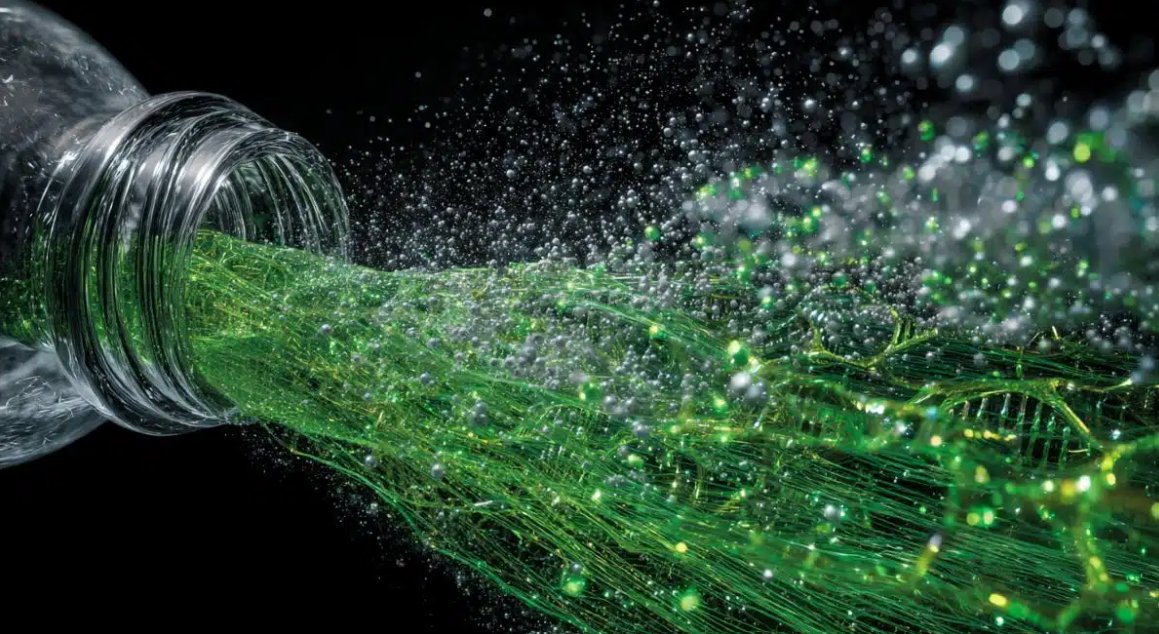
मौत के बाद जीवन: वैज्ञानिकों ने जाम्बी कोशिकाओं को किया जिंदा, जीनोम ट्रांसप्लांट के जरिये असंभव को किया संभव #ZombieCells #Scientists #GenomeTransplantation amarujala.com/world/scientis…
मौत के बाद जीवन: वैज्ञानिकों ने जाम्बी कोशिकाओं को किया जिंदा, जीनोम ट्रांसप्लांट के जरिये असंभव को...

मौत के बाद जीवन: वैज्ञानिकों ने जाम्बी कोशिकाओं को किया जिंदा, जीनोम ट्रांसप्लांट के जरिये असंभव को किया संभव

From amarujala.com
1
512
SherryPittsburgh
SherryPittsburgh @SherryB446368 ·
#Missing #Scientists #Suspicious #CIA #FBI
Jake Jake @JakeCan72 ·
Five scientists. Three dead. Two missing. Rep. Tim Burchett knows them personally. Some testified before Congress. His exact words: “Something dark is going on. I’m not suicidal.” William McCasland — retired Air Force Major General. Missing since February 27. Left wearing evolver. FBI is searching. No trace. Monica Reza — aerospace materials scientist. Vanished hiking in Angeles National Forest. June 2025. Still missing. Nuno Loureiro — MIT fusion physicist. Shot dead at home. December 2025. Carl Grillmair — Caltech astrophysicist. Shot dead. February 2026. Jason Thomas — Novartis chemical biologist. Body found in a Massachusetts lake. March 2026. No law enforcement agency has officially connected these cases.
20
Jimmy B
Jimmy B @jaymzbishara ·
Add to the list the most recent milestone study—that, after 58 generations of cloning mice, they apparently immediately die once born, with no known cause. #Scientists previously thought they could clone endlessly; they are stumped, for now, for how to remedy. #TMYK
Niko McCarty. Niko McCarty. @NikoMcCarty ·
Mouse studies often fail to replicate in surprising ways. Let me enumerate some of the ways: 1. Mice handled by male scientists feel less pain. The finding holds true when a female scientist does the experiment but holds a t-shirt, previously worn by a man, near the mouse. The inutes. 2. Mice spend less time licking an irritated part of their body when a human is nearby, “even if that ‘person’ is a cardboard cutout of Paris Hilton.” 3. Mice raised at five different animal facilities in Europe, under otherwise identical conditions, had “persistent differences in body weight” and behavior. 4. If two different scientists at the same university carry out the same experiment on mice, their results will be MORE replicable than if the same exact experiment were carried out by the same person at separate universities. 5. Mice that give birth in cages with little toys or knick-knacks produce more pups. Those pups are larger after 21 days. 6. “Mice housed on deep bedding had smaller adrenal, kidney, liver and heart weights as well as larger body and tail lengths compared with groups kept on shallow bedding” after just 12 weeks, according to one study. 7. Animals stored on higher shelves are more stressed and have impaired immune systems, probably because these areas are closer to lights and vibrate more. Mice on the top shelf of a rack receive 20-80x more light than mice housed at the bottom. 8. Mice exposed to even dim light during the night (e.g. an LED on a computer monitor) “had a body mass gain…about 50 percent more than other mice that lived in a standard light-dark cycle.” 9. After just four weeks, mice exposed to a dim light during the night ate more than those in complete darkness. (Mice, like humans, raid the proverbial refrigerator when they can’t sleep.) Many genes linked to inflammation were also activated. 10. Mice kept in cages with wood chip bedding eat about 1.5 grams of their mattress every day. This changes the bacteria in their microbiomes. 11. (Not about replication, but) about 80% of drugs are tested only on male mice. Even though some drugs, notably Ambien, are more potent in females and cause more side effects. 12. About 6% of all mouse genes are regulated in sex-specific ways. The expression level of more than 1,000 genes varies between males and females, and the level of another 600 genes wobble, up and down, during a female’s estrous cycle. 13. Grain-based food usually contains unknown amounts of phytoestrogens, which change the onset of an animal’s puberty. 14. The standard diet for mice, called AIN-93, hasn’t changed in 30 years. But manufacturing of that food HAS changed: Even if you use “the same grain-based diet used in the past by others, its composition will likely differ.” In other words, the same food used in mouse studies today vs. the 1990s is different, even if its name is unchanged. 15. Mice exposed to a regular, 37 Hertz magnetic field spend less time exploring open spaces, and more time sleeping. 16. Mice are kept in rooms between 69 and 79 degrees F. “But the natural comfortable temperature for mice is warmer — between 30 and 32 degrees Celsius (86 to 90 degrees Fahrenheit).” Colder mice experience more stress, their tumors grow faster than mice kept in warm rooms, and “mice genetically modified to develop obesity only gained a lot of weight at warmer temperatures but not at colder temperatures.” All links at source below. These studies make for fun reading materials.

30
Bharat Rathi🇮🇳
Bharat Rathi🇮🇳 @bharatrathi ·
#Scientists Built Something That “Ticks Forever”… Inside a #QuantumMachine What if scientists created something that moves… without ever using energy*? Sounds impossible, right? Inside a powerful #quantum #computer, researchers managed to create a strange new form of matter #timecrystal**. But this isn’t a crystal you can touch. It’s something far more mysterious. Instead of repeating patterns in space like a normal crystal, this one repeats in **time** — almost like a #clock that keeps ticking without winding down. At first glance, it sounds like the laws of physics are being broken. A system that never stops? Never loses energy? But here’s the twist… it only works under extremely controlled conditions, deep inside a quantum system, far from our everyday world. So no, this doesn’t mean time travel is here. But it does mean scientists have discovered something completely new — a hidden rhythm of nature that wasn’t known before.And the real question is… if time itself can “crystallize,” what else about our universe are we still missing? Source Google #QuantumAI, & collaborators. (2021). *Observation of a discrete time crystal on a quantum #processor*. #Nature.
8
DailyShorts.io
DailyShorts.io @DailyShorts3 ·
#Scientists at the European Organization for Nuclear Research (#CERN) have successfully completed a world-first experiment: #transporting #antimatter, one of the fundamental particles believed to contributed to the creation of the universe, by #truck. dailyshorts.io/science/antima…
CERN succeeds in taking antimatter on a test drive- Daily Shorts | USA

Scientists at the European Organization for Nuclear Research (CERN) have successfully completed a world-first experiment: transporting antimatter, one

From dailyshorts.io
2
Vijayavani Digital
Vijayavani Digital @Vijayavani_Digi ·
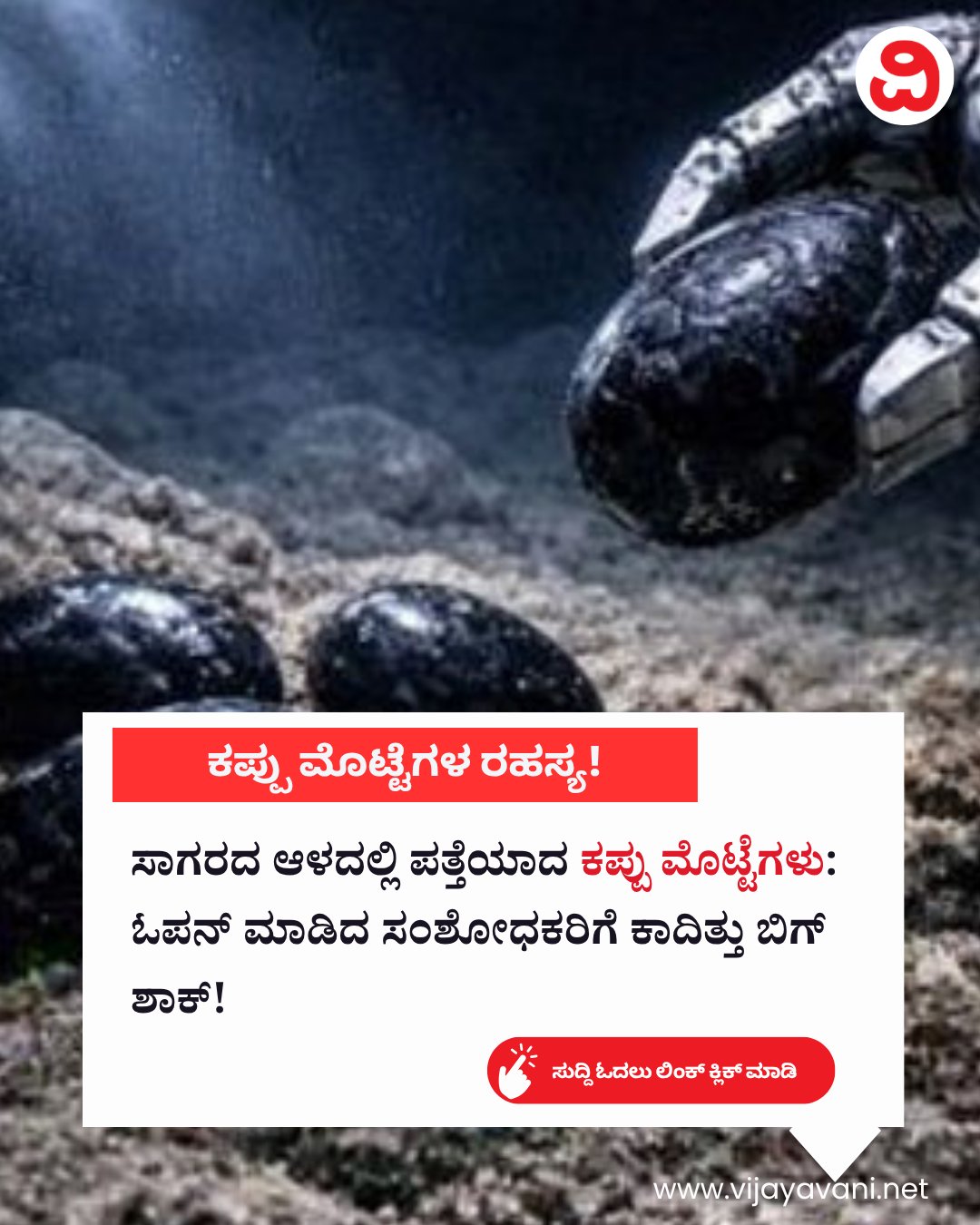
ಸಾಗರದ ಆಳದಲ್ಲಿ ಪತ್ತೆಯಾದ ಕಪ್ಪು ಮೊಟ್ಟೆಗಳು: ಓಪನ್​ ಮಾಡಿದ ಸಂಶೋಧಕರಿಗೆ ಕಾದಿತ್ತು ಬಿಗ್​ ಶಾಕ್​! Black Eggs #BlackEggs #PacificOcean #Scientists #Sea #Discovery #KannadaNews #VijayavaniNews vijayavani.net/category/news/…
ಸಾಗರದ ಆಳದಲ್ಲಿ ಪತ್ತೆಯಾದ ಕಪ್ಪು ಮೊಟ್ಟೆಗಳು: ಓಪನ್​ ಮಾಡಿದ ಸಂಶೋಧಕರಿಗೆ ಕಾದಿತ್ತು ಬಿಗ್​ ಶಾಕ್​! Black Eggs -...

Black Eggs : ಈ ಜಗತ್ತು ಸಾಕಷ್ಟು ನಿಗೂಢಗಳಿಂದ ಕೂಡಿರುವುದು ಹೊಸ ಸಂಗತಿಯೇನಲ್ಲ. ವಿಷ್ಮಯಕಾರಿ ಜಗತ್ತಿನ ಬಗ್ಗೆ ಮನುಷ್ಯ ತಿಳಿದುಕೊಳ್ಳಬೇಕಾದ ವಿಚಾರ ಸಮುದ್ರದಷ್ಟಿದೆ.

From vijayavani.net
60