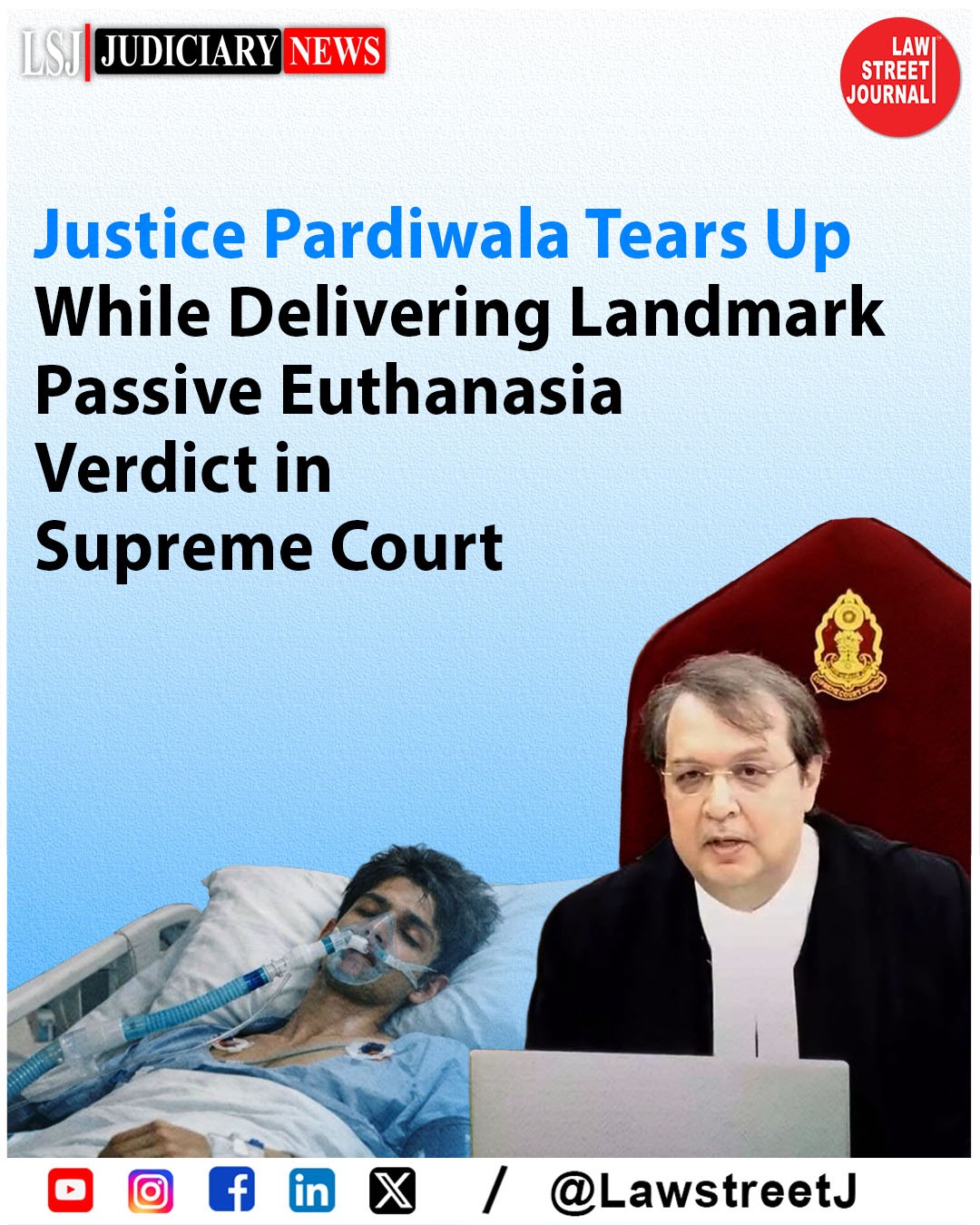
Justice J. B. Pardiwala became visibly emotional and briefly teared up while delivering a
#landmarkjudgment in the
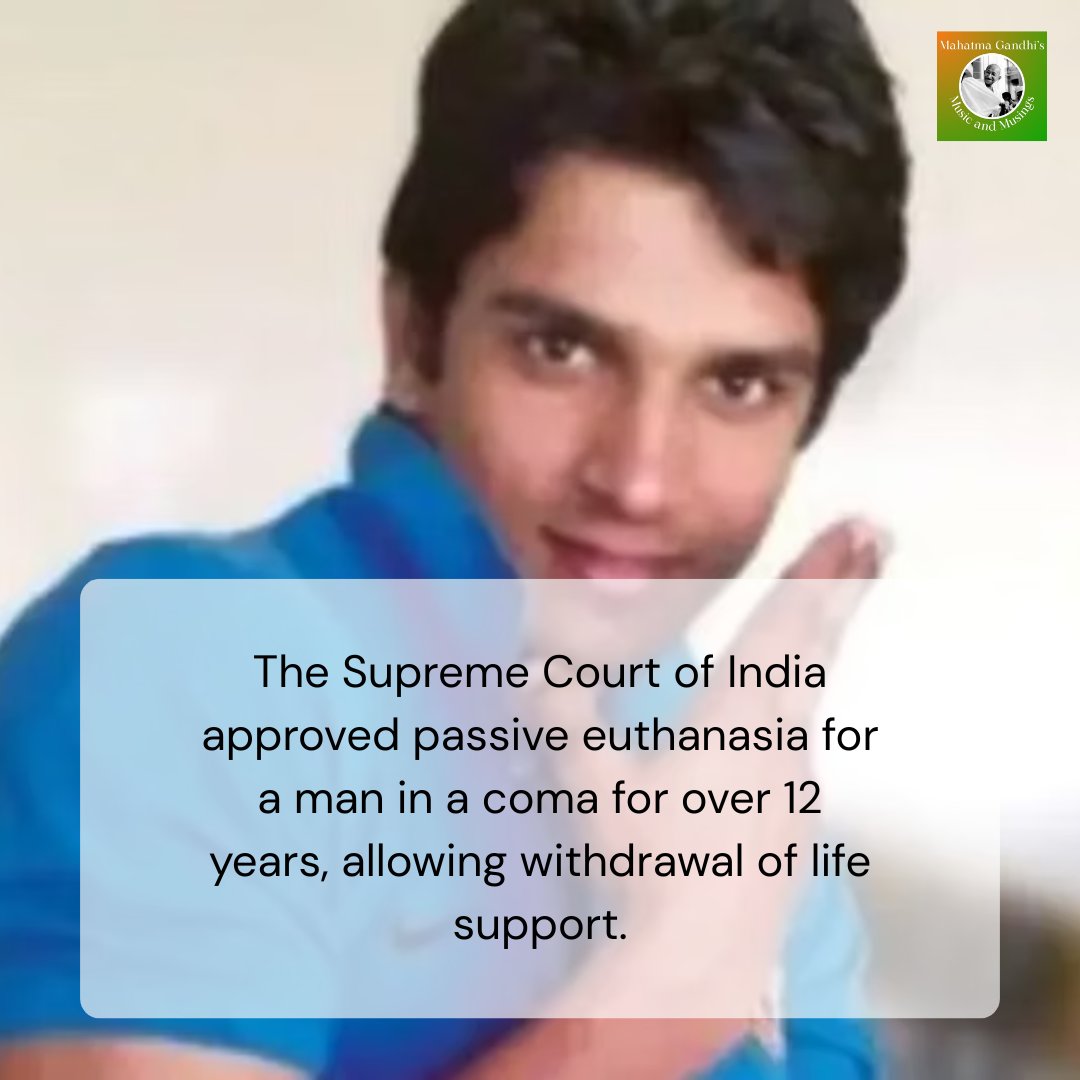
#SupremeCourt allowing passive euthanasia for Harish Rana, a 32-year-old man who has remained in a persistent vegetative state for the past 13 years following a tragic fall. The Bench of Justice Pardiwala and Justice K. V. Viswanathan permitted Rana’s parents to withdraw life-sustaining medical treatment, observing that the crucial question in such cases is not whether death is in a patient’s best interest, but whether continuing treatment truly serves the patient’s best interest.
The Court noted that Rana has been surviving only through Clinically Administered Nutrition (
#CAN) provided via a PEG tube and has shown no meaningful neurological improvement for over a decade. Clarifying the legal position, the Bench held that CAN constitutes medical treatment and can be withdrawn when Primary and Secondary Medical Boards conclude that there is no realistic prospect of recovery. The decision applies the principles laid down in the Supreme Court’s 2018 Common Cause v. Union of India judgment recognising the right to die with dignity.
Calling the case deeply tragic, Justice Pardiwala reflected on how Rana was once “a bright young boy” before the accident changed the course of his life. The Court directed that the withdrawal of life support be carried out in a dignified manner at the palliative care centre of
#AIIMS and also recommended that the Union Government consider bringing comprehensive legislation governing passive euthanasia and end-of-life care in India.
#PassiveEuthanasia #RightToDieWithDignity #LivingWill #MedicalEthics #ConstitutionalLaw #HumanDignity #JusticeKVViswanathan