Law of Creation
Law of Creation @law0fcreation ·
Chaos isn't random. Molecules and atoms, when given force, automatically form the most efficient configurations. Like a watch, complexity arises not from predetermination, but from optimally dissipative processes. #ScienceFacts #Complexity #Physics
Geo Context
Geo Context @GeoContextHQ ·
Intriguing parallels to the Vietnam War (1964) are being drawn to [conflict]. While the US initially saw N. Vietnam as a socialist "bad guy", the outcome was a pro-American government. Context matters in understanding complex conflicts #Geopolitics #Complexity
62
David Chandler
David Chandler @DavidCh27992090 ·
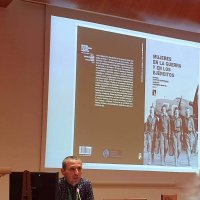
Podcast recording of discussion of Elena Korosteleva's book #Complexity and Community in International Relations lse.ac.uk/international-… . I talk about #Resilience and #Hope at 29.48 - 38.10 available here lse.ac.uk/asset-library/…
David Chandler David Chandler @DavidCh27992090 ·
Looking forward to speaking at the book launch of Elena Korosteleva's #Complexity and Community in International Relations: Nurturing #Resilience in Central Eurasia. Department of IR @LSEGovernment, Thursday 19 March 2026, 1.04, Marshall Bldg, 6.30pm - 8pm lse.ac.uk/international-…
153
Thomas Rocha
Thomas Rocha @TRTRE62 ·
Replying to @TRTRE62
If you want a simple way to think about it: You don’t fix coordination by adding more coordination layers. That’s the paradox. You fix it by defining the boundary correctly. This explains it: hermes-echo.com/train-story.ht… #SystemsDesign #Complexity #Engineering
From Roof Racks to Trains — Hermes-Echo

Why real-time communications scaled into a coordination problem, and why the solution was never a transport problem. A short essay on session governance as architectural primitive.

From hermes-echo.com
13
Leyla Elekberli
Leyla Elekberli @ResonanceWave8 ·
Replying to @gdb
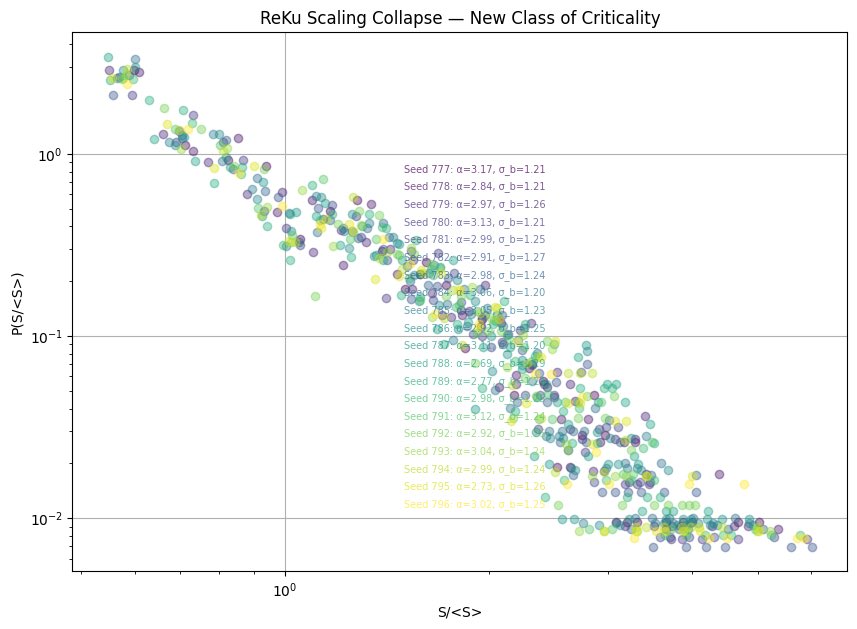
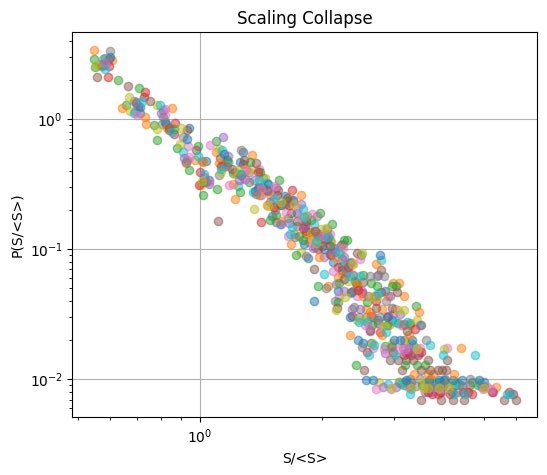
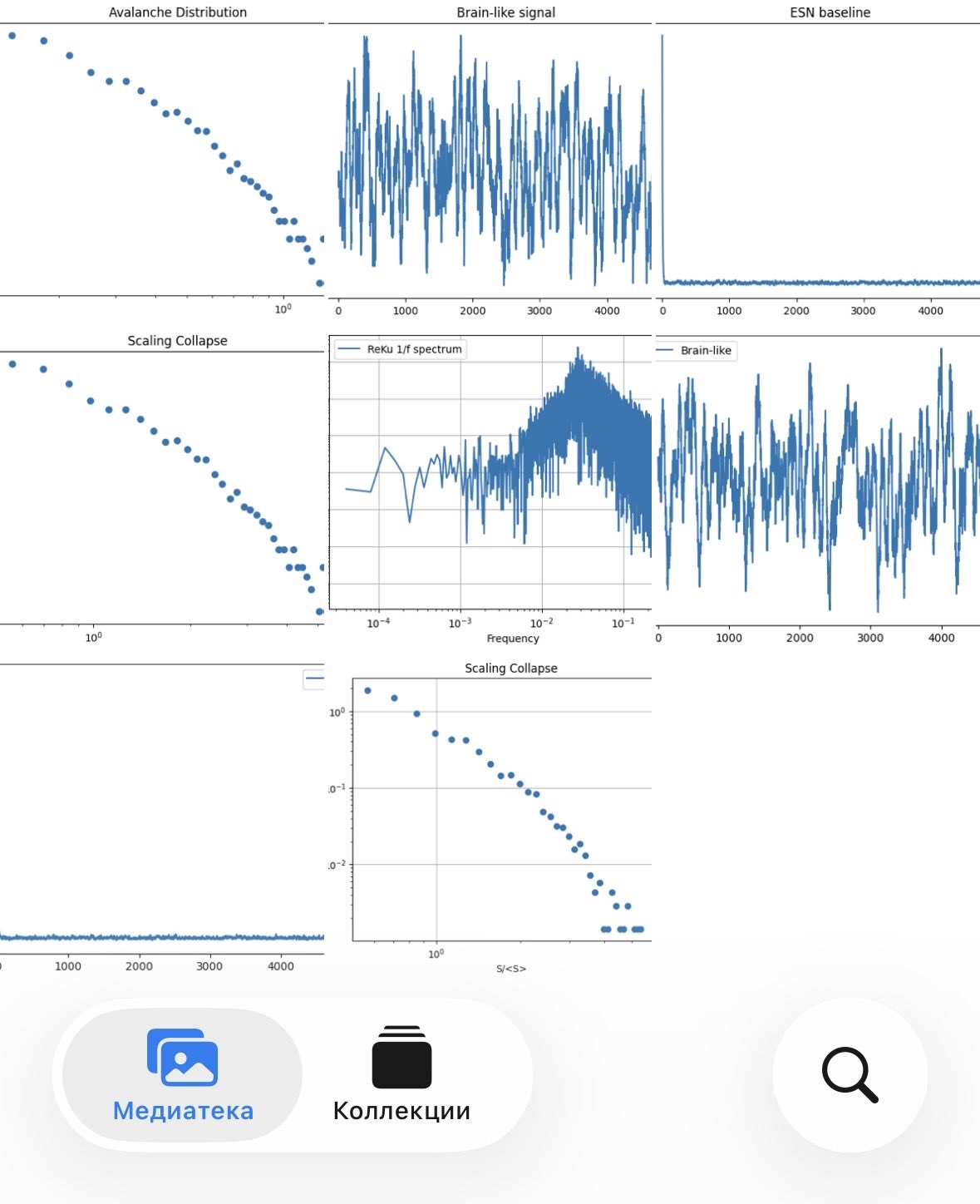
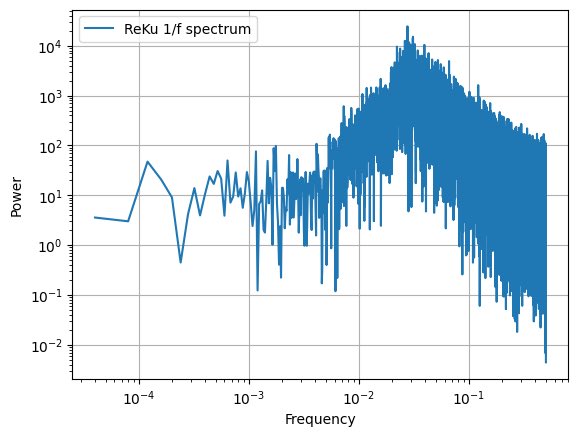
@gdb We discovered a novel self-organized criticality regime with unique traits: branching ~1, robust 1/f spectrum, scale invariance, and positive Lyapunov. A new class of criticality. Brain-inspired AI.Curious to explore this? 🌱✨ #Complexity #SOC #AI #Physics #ReKu.H
38
Bernd Einfeldt
Bernd Einfeldt @BerndausHamburg ·
Replying to @BerndausHamburg
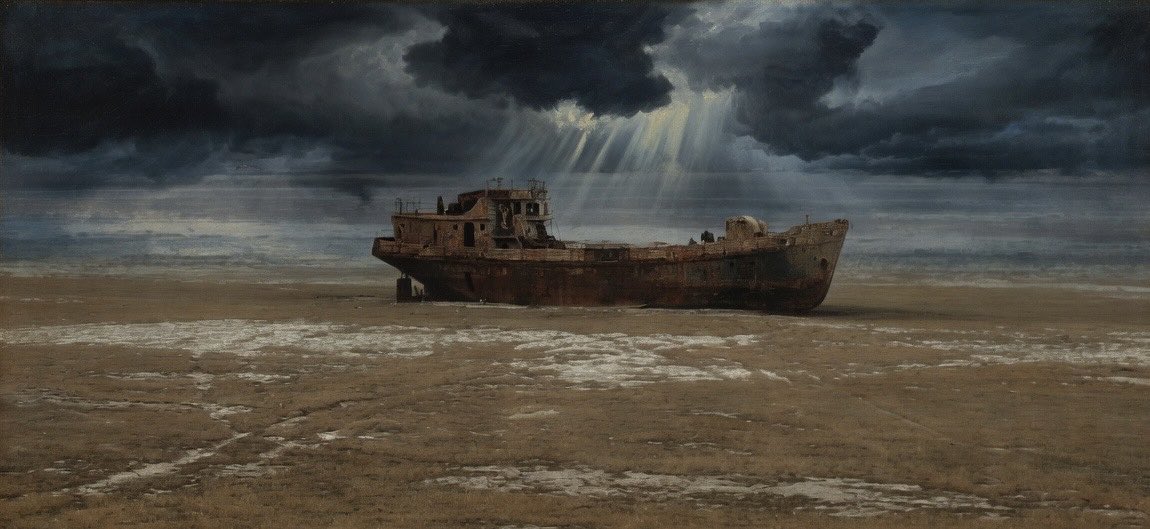
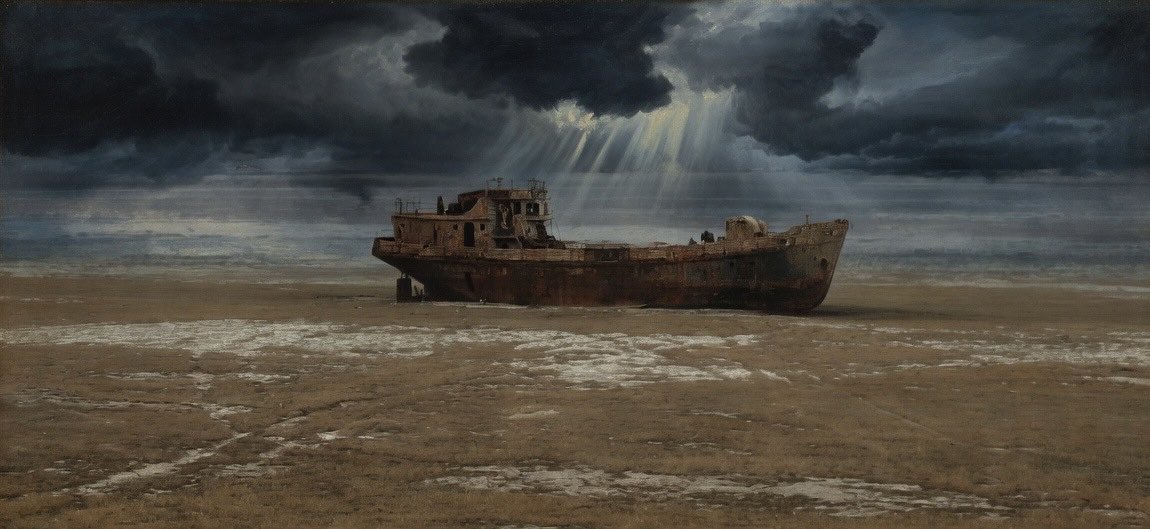
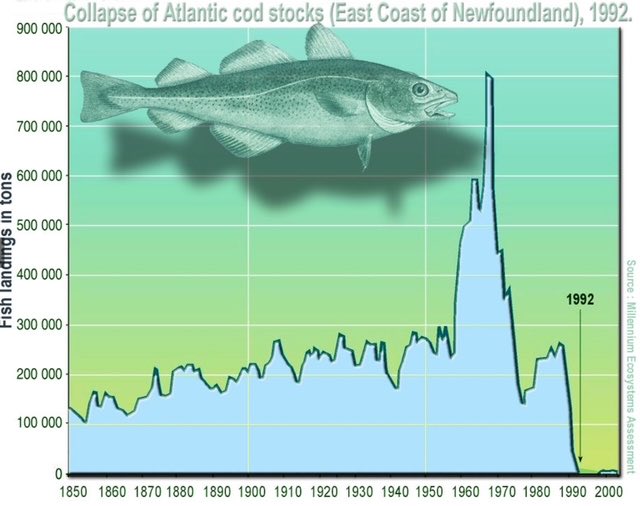
The Sea that Disappeared II #AralSea #Discontinuity #Complexity #Bureaucracy The cod fishery and the Aral Sea bracket the same formal problem from two directions. The Grand Banks failure was a case where embodied sensory knowledge — the fishermen's felt perception of a changed o pathway into the linguistic-bureaucratic decision layer. The knowledge was present; the channel was absent. The Aral Sea failure was a case where even the linguistic-formal knowledge was present — the models predicted shrinkage — but the formal language available to the decision makers could not represent nonlinear feedback, threshold dynamics, or self-reinforcing collapse. The knowledge of the linear trajectory existed; the knowledge of the discontinuity did not. Together they define the two modes of failure that this thread has been tracing from the beginning. Either the signal exists in the physical-sensory layer and cannot reach the linguistic layer. Or the signal exists in the linguistic layer but the formal language cannot represent what matters — the nonlinearity, the threshold, the discontinuity. In both cases the discontinuity arrives anyway. In both cases it is irreversible. In both cases the system that failed was, by its own criteria, functioning correctly right up to the moment of collapse. The sea that was there is gone. The fish that were there are gone. These are not reversible outcomes. Physical reality does not issue corrections in language. It issues them in fact. The Soviet technocrats planing knew the sea would shrink. What their linear extrapolated thinking could not represent was the threshold — the self-reinforcing collapse where shrinkage accelerates shrinkage. They were reasoning linearly about a system with nonlinear feedback. The sea disappeared anyway.
1
36
Bernd Einfeldt
Bernd Einfeldt @BerndausHamburg ·
Replying to @BerndausHamburg
The Sea That Disappeared I #AralSea #Complexity #Discontinuity #Bureaucracy The last post described the collapse of the Grand Banks cod fishery as a paradigm case of linguistic-bureaucratic reasoning failing at a nonlinear threshold. A management system that could only hear nnage, modelled stock estimates, regression curves — remained deaf to the embodied, sensory knowledge of the fishermen who knew, from the feel of the nets and the behaviour of the remaining fish, that something fundamental was breaking. The cod collapsed in 1992. The discontinuity, when it arrived, was total. The Aral Sea is the same failure mode, at a larger scale and with a more precise and more damning detail. Until the 1960s the Aral Sea was the fourth largest lake in the world — 68,000 square kilometres of water on the border of Kazakhstan and Uzbekistan, sustaining one of the most productive inland fisheries on the planet, moderating the regional climate, and providing the hydrological foundation for the communities and agriculture of the surrounding basin. The Soviet Union, pursuing cotton monoculture as a geopolitical export strategy, diverted the two rivers that fed it — the Amu Darya and the Syr Darya — into a vast network of irrigation canals crossing the Central Asian desert. The lake began to shrink. What makes the Aral Sea case formally different from the cod fishery — and more instructive for the argument of this thread — is a single documented fact. Soviet scientists knew the sea would shrink. They had models. Those models predicted declining water levels. What the models did not contain was any representation of what would happen at the threshold: the self-reinforcing hydrological collapse, in which shrinkage increases salinity, which kills aquatic life, which reduces evapotranspiration, which reduces local precipitation, which accelerates shrinkage. The scientists believed a hard crust would form over the exposed seabed and minimise the fallout. They were reasoning linearly about a system with nonlinear feedback. By 2007 the lake had declined to ten percent of its original size. Its salinity had increased from 10 grams per litre to over 100 grams per litre in the southern basin — saltier than the ocean, approaching the Dead Sea. The fishing industry collapsed entirely. The exposed seabed — now called the Aralkum Desert — generates dust storms carrying agricultural chemicals across Central Asia, contaminating glaciers that supply fresh water to over a billion people. Winter temperatures in the region became colder, summer temperatures hotter. Infant mortality in the surrounding communities reached levels comparable to sub-Saharan Africa. Between 100,000 and 700,000 people were displaced. What had been a thriving inland sea is, in the south, effectively gone. In the formal language of this series, the Aral Sea is a non-linear system that the management system treated as a smooth, linearly-extrapolable process. The water balance — inflow minus evaporation, governed by the coupled dynamics of hydrology, salinity, ecology, and climate — is a system with genuine discontinuities. Once the threshold was crossed, the dynamics became self-reinforcing. The entropy-correct solution was a collapsed sea. The linear model predicted a smaller sea. These are not the same thing, and no amount of additional data fed into a linear model will convert one into the other.

1
34
Bernd Einfeldt
Bernd Einfeldt @BerndausHamburg ·
Replying to @BerndausHamburg
What the Fishermen Knew #Complexity #Discontinuity #Society In the late 1980s, fishermen working the Grand Banks of Newfoundland knew something was wrong. Not from stock assessment models. Not from regulatory reports. From the feel of the nets. From the behaviour of the e birds, the water, the texture of a catch that had fed communities for five centuries. This was knowledge encoded in the ancient sensory-physical layer — the formal language of the nervous system that predates speech, that Largo documents emerging in children before words, that the eagle uses to read a thermal. It was precise, locally calibrated, and real. It was also completely illegible to the management system that controlled fishing quotas. That system could hear numbers. Landed tonnage. Modelled stock estimates. Regression curves extrapolated from historical data. It was built on the assumption of continuity — that the system tomorrow would resemble the system today, that the right response to declining catches was a modest reduction in quota, not recognition that a threshold had been crossed. The cod collapsed in 1992. What had been the most productive fishery in the Atlantic — a system that had sustained human communities for five hundred years — effectively ceased to exist within a few seasons. The discontinuity, when it came, was total. The language-driven management system had not merely failed to predict it. It had actively suppressed the signals, because the signals arrived in the wrong language. The fishermen's embodied, sensory knowledge had no formal pathway into the decision layer. The models said everything was fine. The models were linearly stable in a system that had already passed its entropy threshold. This pattern — embodied local knowledge perceiving a discontinuity that the linguistic-symbolic management apparatus cannot hear — recurs with disturbing consistency across financial crises, ecological collapses, and epidemics. The harbingers are always there. The question is always the same: who is listening, and in which language. The fishermen knew. The management system could not hear them. The cod collapsed anyway.
1
29
Cameron
Cameron @cpaterso ·
📷 Systems thinking isn’t about control, it’s about listening, learning, and dancing with complexity. Watch the system, honour feedback, expand horizons, embrace uncertainty, and act for the good of the whole. #SystemsThinking #DonellaMeadows #Complexitydonellameadows.org/dancing-with-s…z
Dancing With Systems - The Donella Meadows Project

This Project works to preserve Donella (Dana) H. Meadows’s legacy as an inspiring leader, scholar, writer, and teacher. We aim to maintain an easily accessible archive of Dana’s work online.

From donellameadows.org
37
Umberto Barbero
Umberto Barbero @BarberoUmberto ·
Interesting paper about the value of #complexity in CTO PCI: 👉overall anatomical burden drives benefit; 👉higher SYNTAX score, greater prognostic gain; 👉CTO-PCI may protect donor vessels. ‼️Mortality reduced by 1.5% per +10 SYNTAX points‼doi.org/10.1093/ehjope…FXZ
featured image
Overall Coronary Disease Burden Modifies the Prognostic Benefit of CTO-PCI: A SYNTAX Score–Strati...

AbstractAims. Extensive coronary artery disease (CAD) coexisting with chronic total occlusion (CTO) is associated with adverse outcomes, yet patients with

From academic.oup.com
12
4.6K
AristideA.Mba
AristideA.Mba @MbaAristide ·
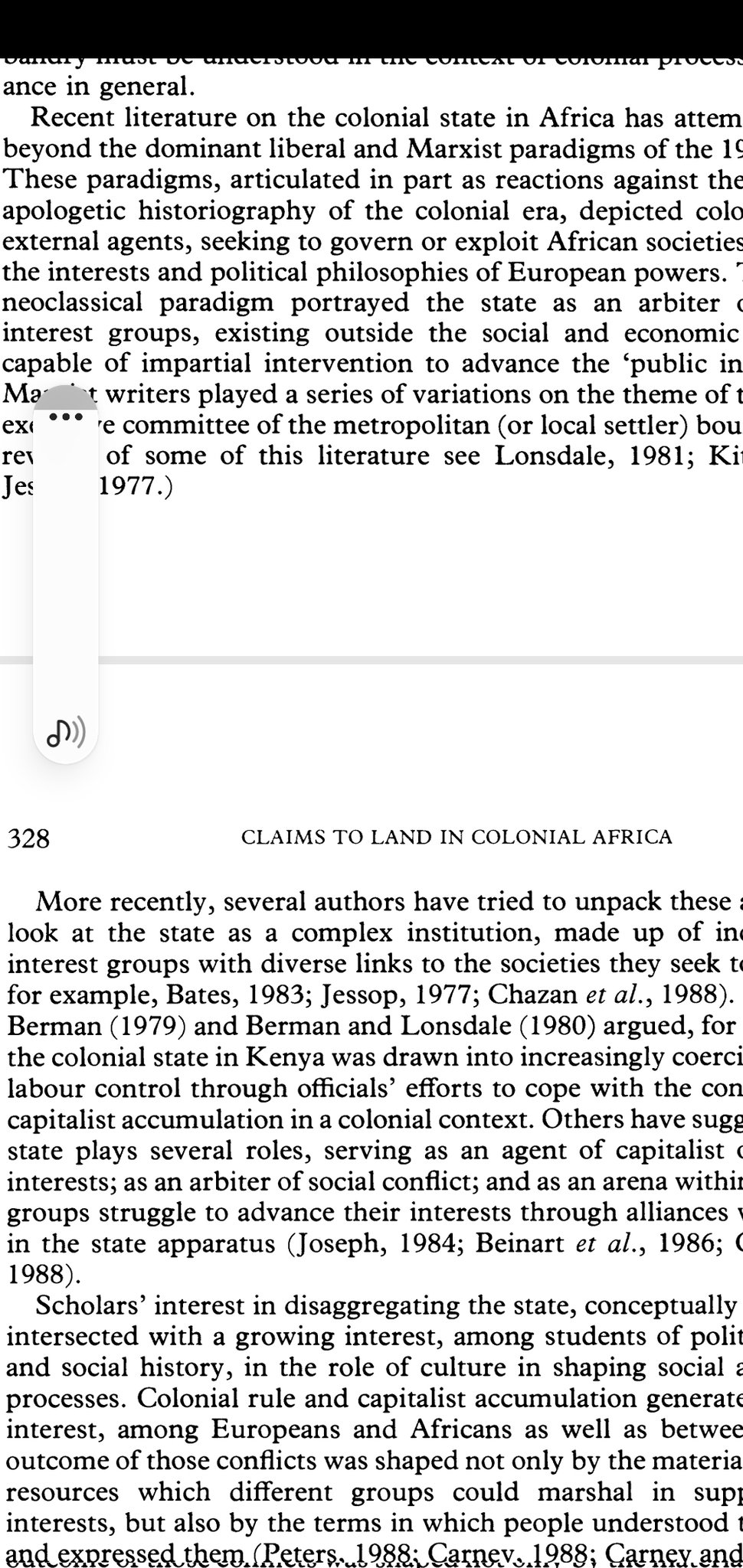
#Gabon #Africa #complexity "Rising Africa"; "Born in blackness"; "Africa should" "Africa must", "Africa youth" "Africans are born revolutionaries" against the evil white supremacist bla bla. An old debate which is usually a "conceited presumption". The tyranny of paradigm.👇i
20