#Api3 ( $API3 ) -
#Explainer
💡 What is Api3 ( $API3 )?
Api3 is a decentralized oracle project focused on delivering reliable and transparent off-chain data (real-world data) to smart contracts on blockchains. The project was launched with the goal of addressing the fundamentalnal oracle structures, where third-party node operators often act as intermediaries.
Instead of relying on external middlemen, Api3 introduces a first-party oracle model. In this model, data providers — such as exchanges, financial institutions, weather services, and insurance companies — connect their own APIs directly to the blockchain. This reduces complexity, lowers the risk of manipulation, and increases transparency in data delivery.
As of 2026, the Api3 ecosystem positions itself as an infrastructure layer for trustworthy data within DeFi and Web3, with a strong focus on accuracy, decentralization, and economic efficiency.
The native token $API3 forms the core of this ecosystem and is used for staking, governance, incentives, and network security.
#CryptoEcosystem
⚙️ How does Api3 work?
The Api3 ecosystem consists of multiple components that together enable a secure and scalable oracle infrastructure:
🔸 Airnode
Airnode is the core technology of Api3 and functions as a lightweight, serverless oracle node that API providers can operate themselves. It does not require complex infrastructure and enables direct, tamper-proof data delivery to smart contracts.
Because data providers manage their own nodes, the need for third-party intermediaries is eliminated, resulting in lower costs and fewer attack vectors.
🔸 dAPIs (decentralized APIs)
dAPIs are aggregated data feeds that combine information from multiple first-party sources to ensure higher accuracy and reliability. More than one hundred dAPI feeds are active across various EVM-compatible blockchains.
These feeds are used by DeFi protocols for price data, liquidations, and other mission-critical on-chain processes.
🔸 OEV Network (Oracle Extractable Value)
A key innovation within Api3 is the OEV Network. This mechanism captures value that would otherwise be lost to MEV during liquidations within DeFi protocols.
Through OEV Rewards, part of this value is returned to the protocols that use Api3 feeds. As a result, the oracles function not only as data providers but also as economic value generators for dApps.
🔸 Managed dAPIs
In later development phases, Managed dAPIs were introduced with improved transparency around data sources, enhanced reliability optimizations, and refined payment mechanisms for users and protocols.
🔸 Governance & DAO
Api3 operates through a DAO structure in which $API3 holders can vote on upgrades, budgets, incentive structures, and strategic decisions within the netw
ork.
#BlockchainInnovation
🪙 The role of $API3
The $API3 token is designed as the backbone of the Api3 ecosystem and serves multiple purposes:
🔸 Governance
Token holders can participate in DAO voting on technical upgrades, OEV structures, treasury management, and network expansion.
🔸 Staking
Users can stake $API3 within the protocol. Staking contributes to network security and enables participation in reward mechanisms.
🔸 Insurance Pool
Staked tokens also function as part of an insurance mechanism to support the reliability of dAPI feeds and mitigate ecosystem risks.
🔸 Incentives
$API3 is used to incentivize dAPI adoption, Airnode integrations, and participation in the OEV ecosystem across the broader DeFi l
andscape.
#Tokenomics
🛠️ Key characteristics:
🔸 Maximum supply: Approximately 160,000,000 $API3 (with inflationary mechanisms for incentives and staking rewards).
🔸 Utility: staking, governance, insurance, and ecosystem incentives.
🔸 Distribution:
The token allocation includes circulating supply and reserved allocations for development, incentives, and community growth.
🔸 Mechanism:
The model includes inflation designed to stimulate network participation and rewards, with staking playing a central role in balancing su
pply dynamics.
#BlockchainProgress
📜 History and development:
The development of Api3 shows a clear technological evolution:
2020: Launch of Api3 with a focus on first-party oracle architecture.
2021–2022: Introduction and expansion of Airnode and initial dAPI integrations.
2023–2024: Expansion across multiple blockchains and growth within DeFi.
2025: Introduction and continued development of the OEV Network.
2026: Further optimization of Managed dAPIs, DAO upgrades, and expanded OEV adoption.
The project maintains high development activity and regularly communicates updates through official channels and commun
ity governance.
#CryptoHistory
💸 Market and user information:
Api3 primarily targets DeFi protocols, developers, and Web3 projects that require reliable and transparent data feeds.
Rather than focusing on end users, the project operates as infrastructure within the blockchain ecosystem. Lending protocols, DEXs, and other financial applications can integrate Api3 to support secure price feeds and liquidation mechanisms.
The community mainly consists of technically oriented participants, DAO voters, and developers who actively engage in governance and ne
twork expansion.
#MarketAnalysis
✅ Advantages of Api3:
🔸 First-party oracle model without third-party intermediaries.
🔸 Innovative OEV mechanism that returns value to DeFi protocols.
🔸 Scalable Airnode architecture.
🔸 Active development and DAO-driven decision-making.
🔸 Strong positioning as a DeFi
infrastructure layer.
#DeFiApplications
⚠️ Challenges and risks:
🔸 Strong competition within the oracle market.
🔸 Dependence on adoption by DeFi protocols.
🔸 Complexity of oracle and liquidation mechanisms.
🔸 Token performance influenced by broade
r DeFi market conditions.
#CryptoChallenges
🛠️ Use cases and adoption:
The use cases of Api3 are primarily focused on data infrastructure within Web3:
🔸 Price feeds: Reliable data for lending and trading protocols.
🔸 Liquidations: Support for accurate and efficient liquidation mechanisms.
🔸 OEV Rewards: Economic value redistribution to protocols.
🔸 Multi-chain support: Integrations across mul
tiple EVM-compatible networks.
#DeFiAdoption
📊 Price and market performance:
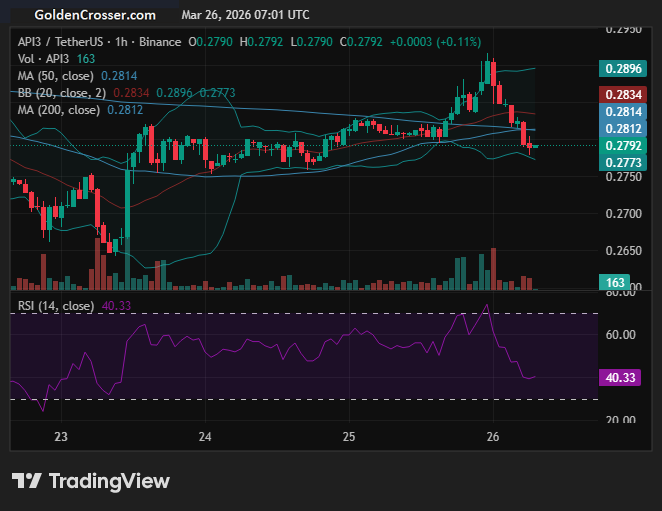
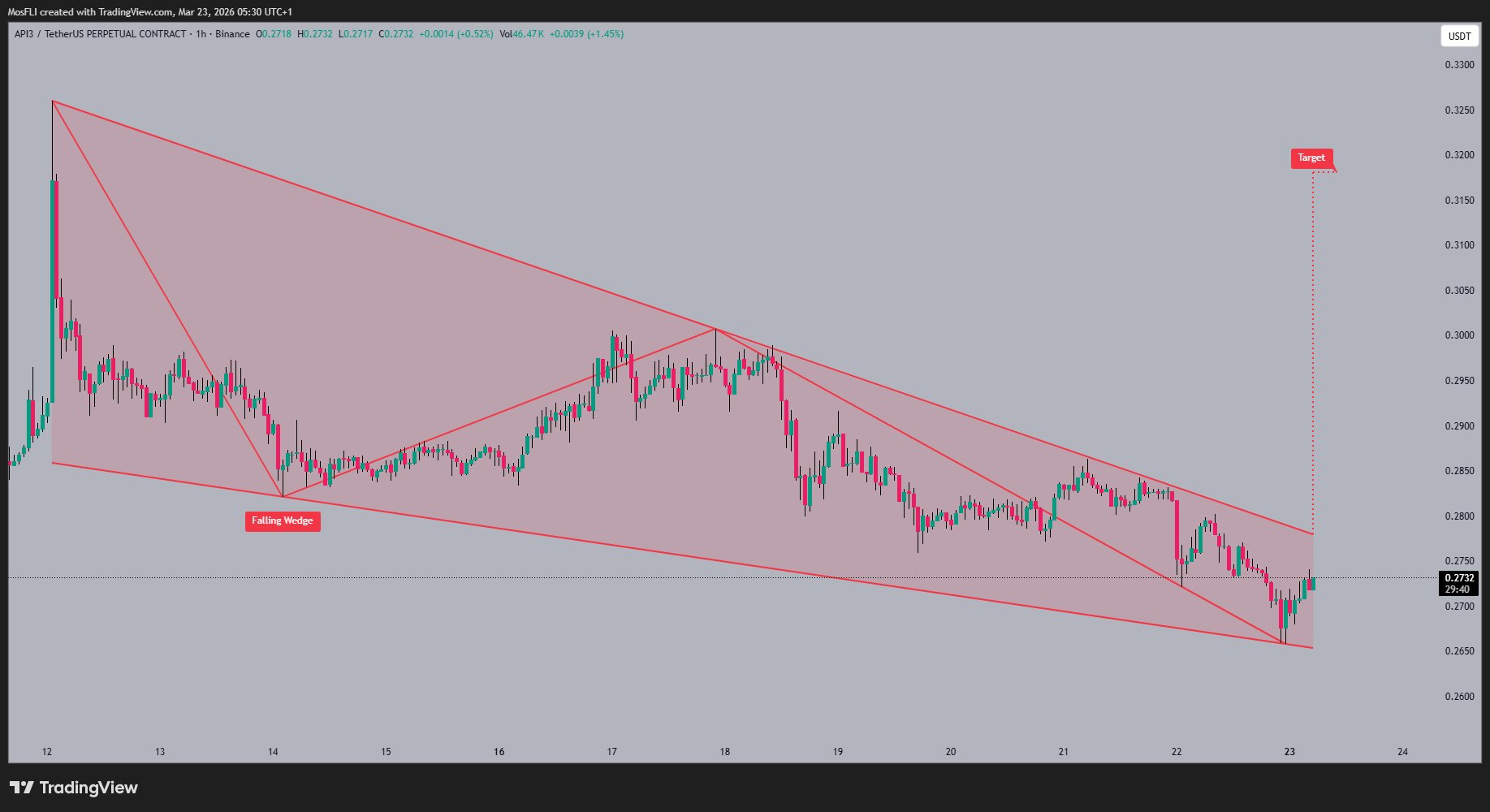
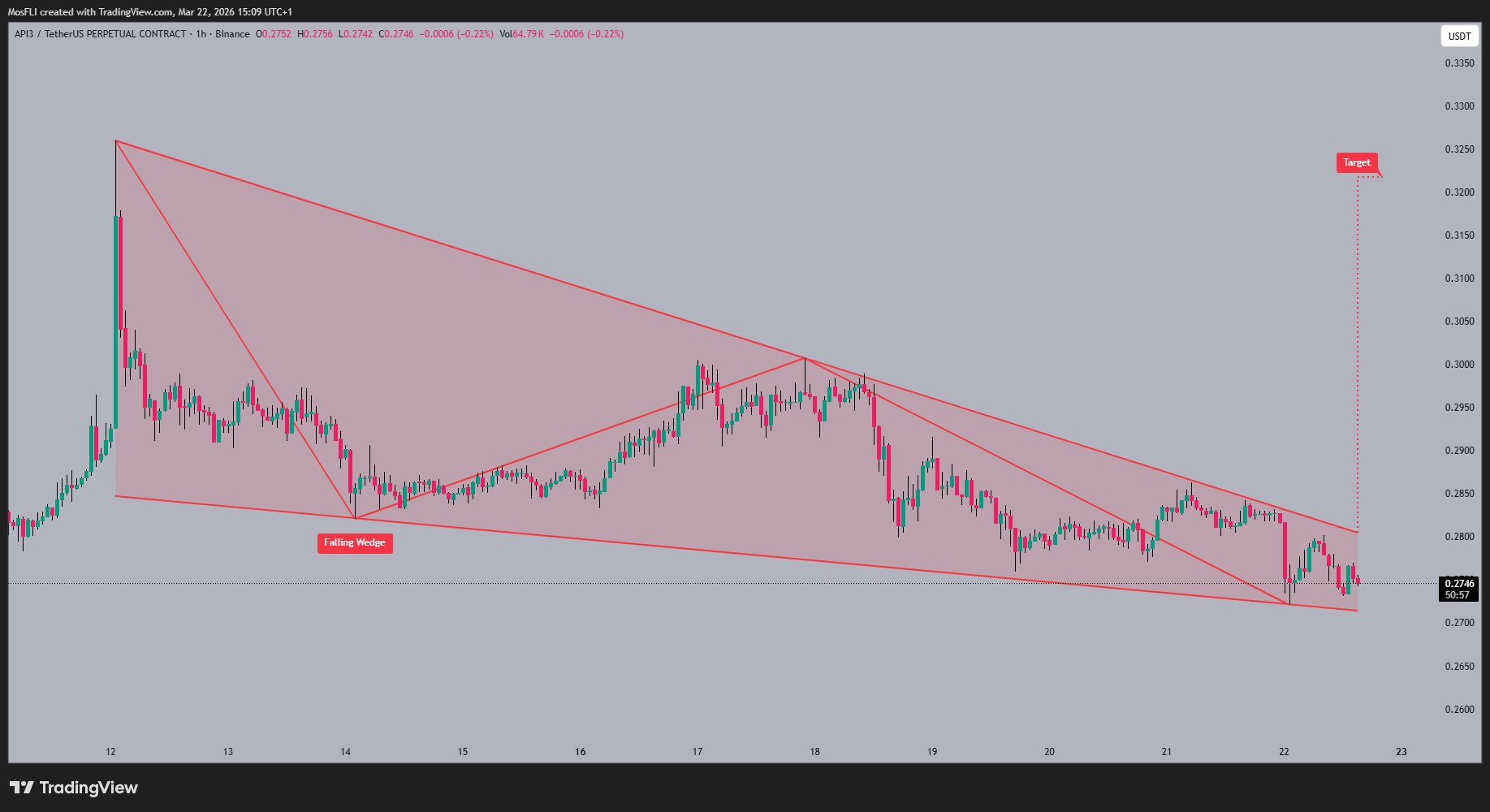
With Api3, the emphasis lies less on short-term price movements and more on technological innovation and DeFi adoption.
The value of the project is primarily determined by:
🔸 Adoption of dAPIs by DeFi protocols.
🔸 The scale and efficiency of the OEV Network.
🔸 DAO activity and governance decisions.
🔸 The overall growth of D
eFi and on-chain liquidity markets.
#MarketVolatility
🔮 Future outlook:
The future of Api3 lies in the continued adoption of first-party oracles and economic optimization through OEV.
Key growth paths include:
🔸 Further scaling of OEV Rewards.
🔸 Expansion to additional blockchains and Layer 2 networks.
🔸 Enhanced staking and insurance mechanisms.
🔸 Continued positioning as an a
lternative to traditional oracle models.
#DeFiFuture
🎯 Conclusion:
Api3 ( $API3 ) is an infrastructure project focused on fundamentally improving how real-world data is delivered to blockchains.
With Airnode, dAPIs, and the OEV Network, Api3 introduces a model in which data providers directly participate and DeFi protocols economically benefit from oracle activity.
For users and investors who believe in the growth of DeFi infrastructure, Api3 offers a technologically strong but competitive profile, where adoption, integrations, and DAO execution remain th
e decisive factors for long-term success.
#CryptoConclusion
👇 Want more in-depth info?
📚 AltcoinPedia with 500+ explainers, roadmaps & extra info
→ Check my Bio for the Notion link and Telegram
🛡️ Disclaimer
This article is purely educational and informational. It contains no financial advice, no investment recommendation, and no price prediction.
Cryptocurrencies are extremely volatile and risky; you can lose your entire investment. Always do your own research (DYOR) before making any decisions.
@CryptoJournaal is 100% independent, receives no compensation or sponsorship for any coverage, and is fully MiCA-compliant.
All facts, sources, analyses, and insights have been verified and independently written by me. AI tools (such as Grok, ChatGPT or others) were used solely for formatting, spell-checking, generating images, and creating 6-second videos.
This is not a crypto-asset marketing communication that has been reviewed or approved by any competent authority in any Member State of the European Union.
Knowledge over hype • Always DYOR