The world is screaming.
And almost no one is listening. 🧠🔥
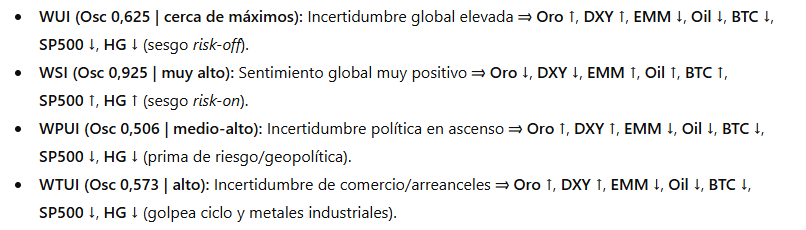
You are looking at four charts:
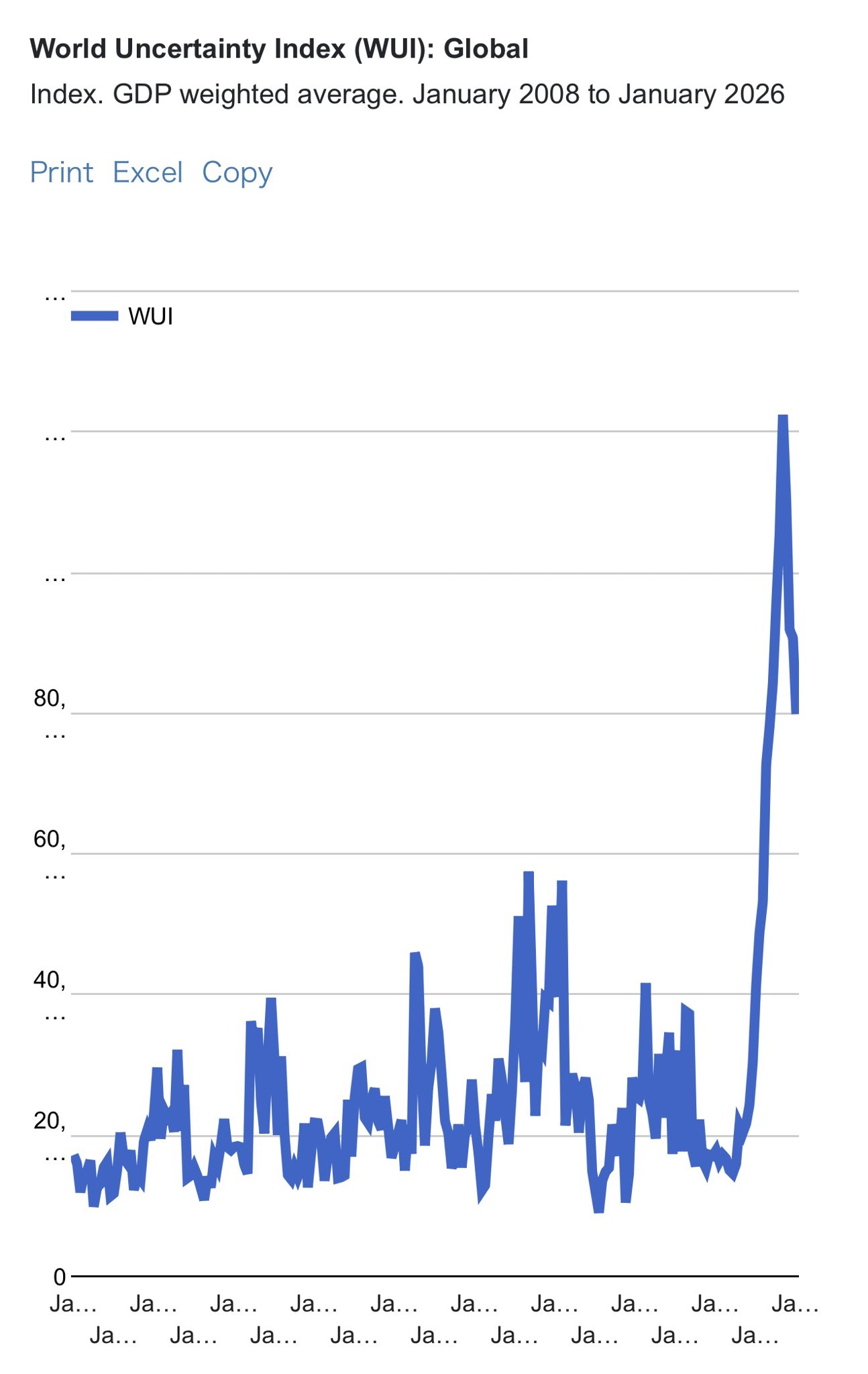
• World Uncertainty Index (WUI)
• World Sentiment Index (WSI)
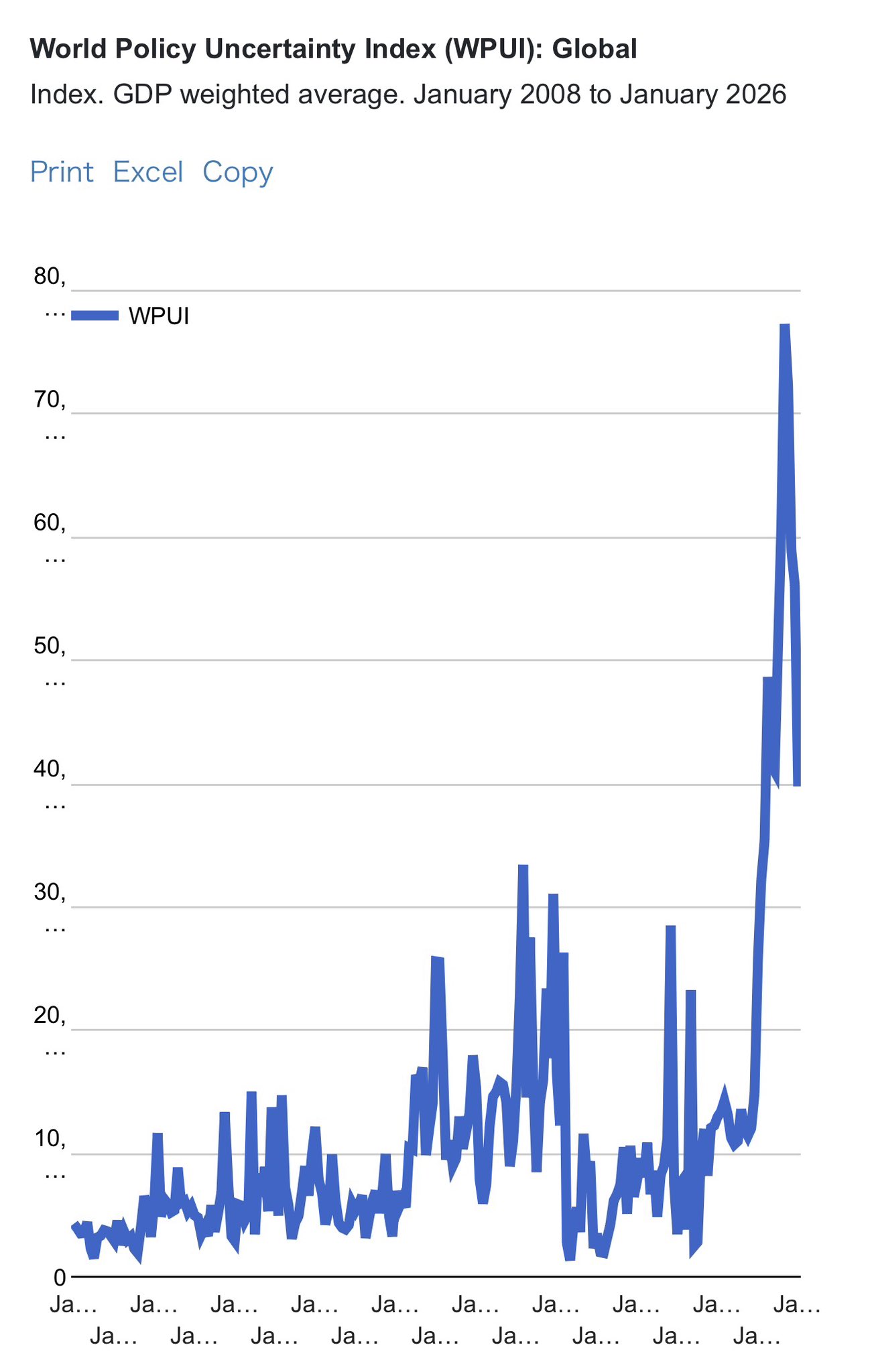
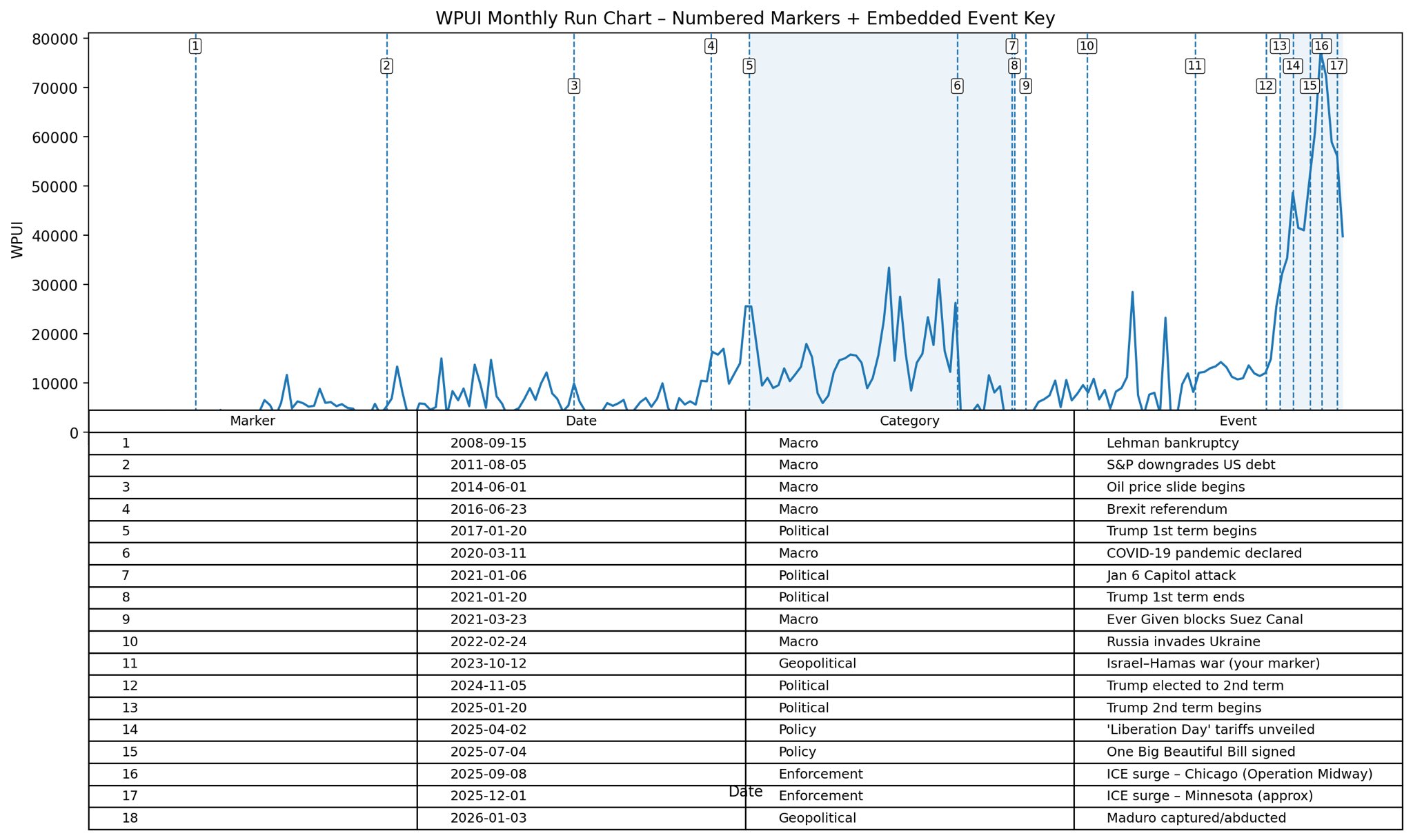
• World Policy Uncertainty Index (WPUI)
• World Trade Uncertainty Index (WTUI)
Let’s decode what this actually meanand why it matters for markets, crypto, and your portfolio.
⸻
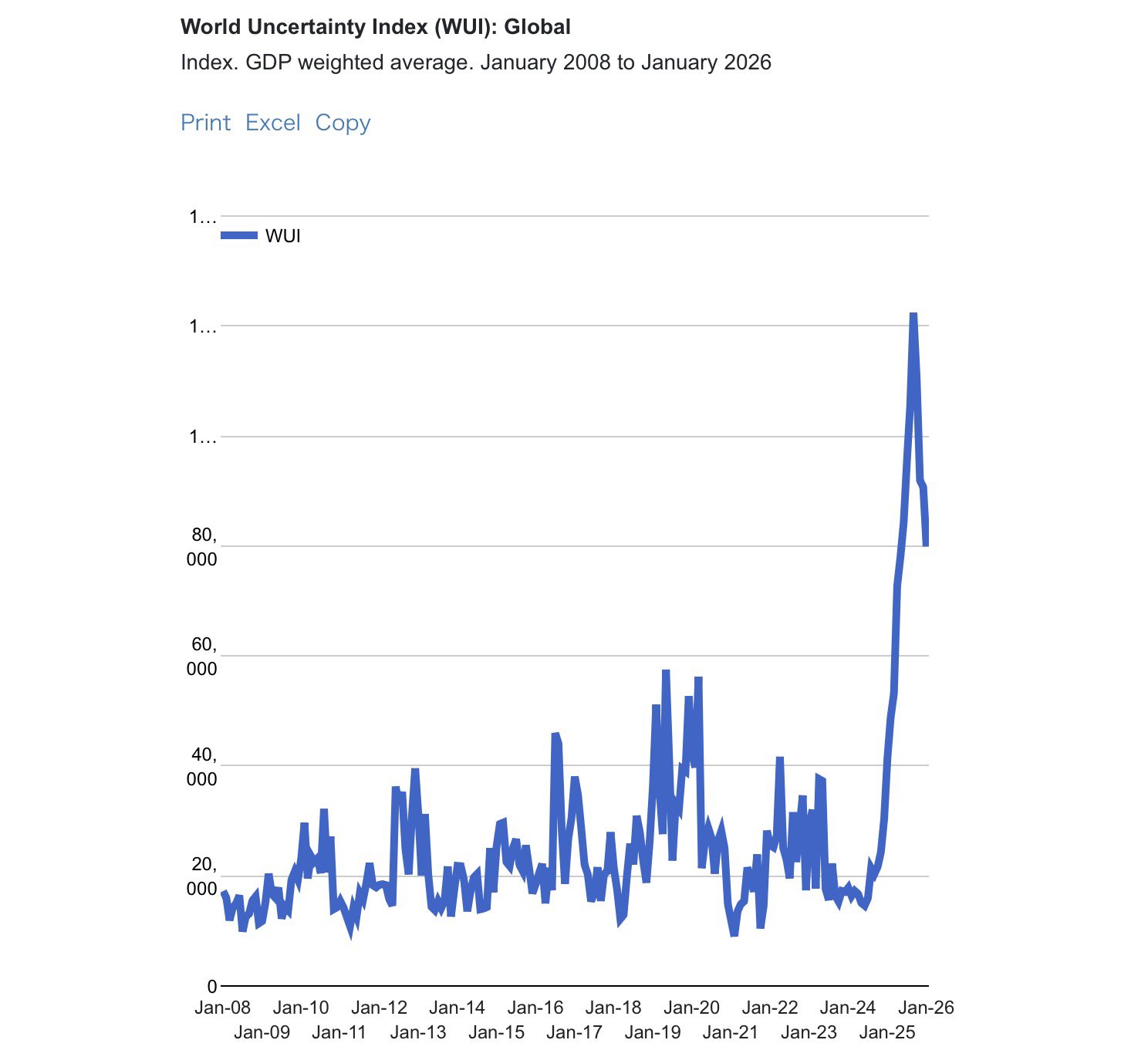
1️⃣ World Uncertainty Index (WUI) — The Big One
This measures how often uncertainty-related terms appear in country reports across the globe.
Translation:
How confused, unstable, and unpredictable the global system feels.
What the chart shows:
From 2008–2024 → volatile but manageable.
2025–2026 → a vertical spike.
Not a bump. Not a wobble.
A full-blown surge.
That kind of spike historically aligns with:
• Financial crises
• Wars
• Pandemic shocks
• Systemic stress
Uncertainty is now at or near all-time highs.
Markets hate uncertainty more than bad news. Because bad news can be priced in. Uncertainty can’t.
⸻
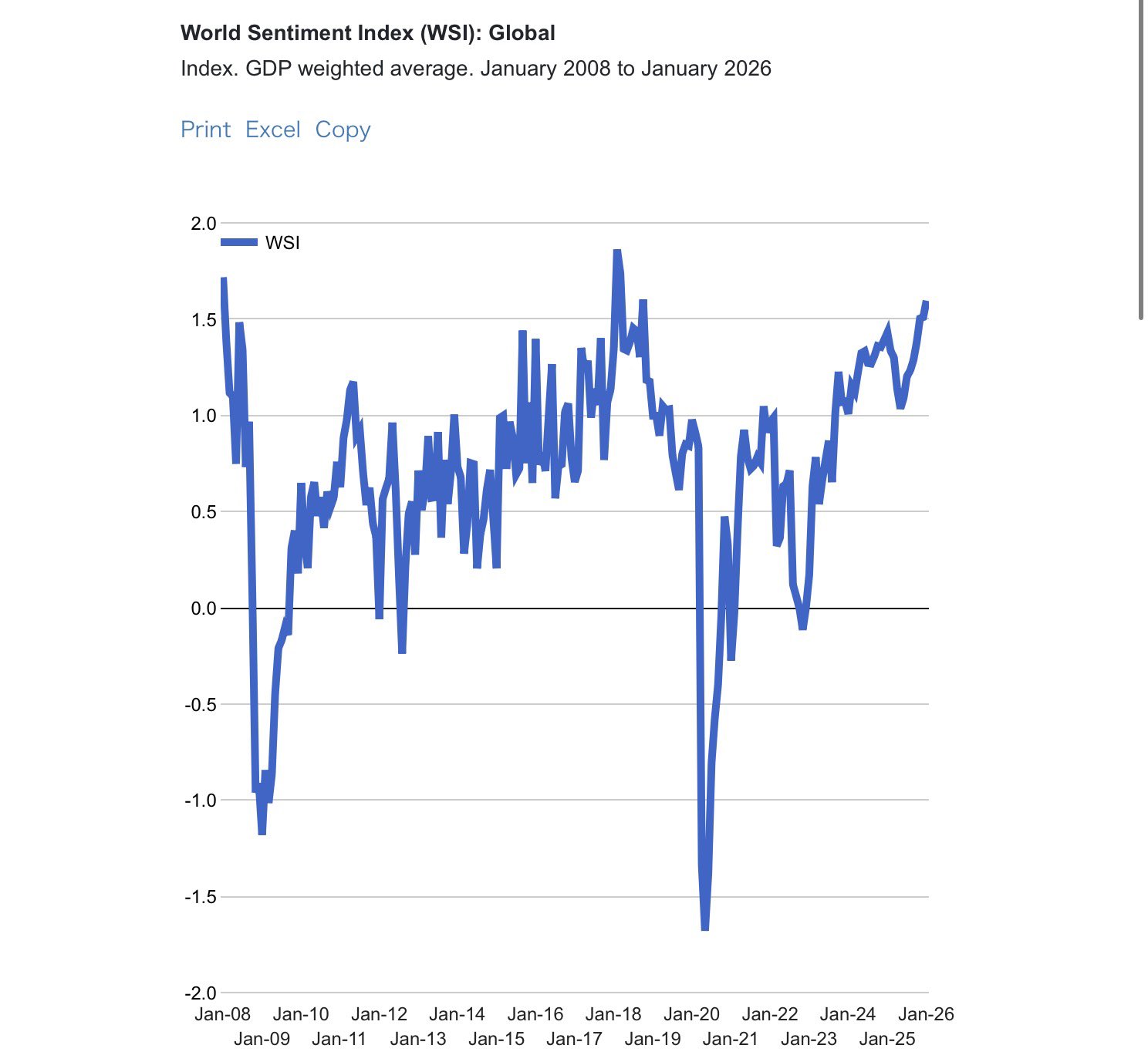
2️⃣ World Sentiment Index (WSI) — The Mood
This measures whether global economic reports are optimistic or pessimistic.
Here’s the twist:
Despite record uncertainty… sentiment is rising.
That’s unusual.
It means:
• People are uncertain
• But not fully bearish
• And not in panic mode
This is often seen in late-cycle environments — when optimism fights rising structural risk.
It’s the “everything feels fragile but we’re still buying” phase.
Dangerous? Maybe.
Opportunity? Also maybe.
⸻
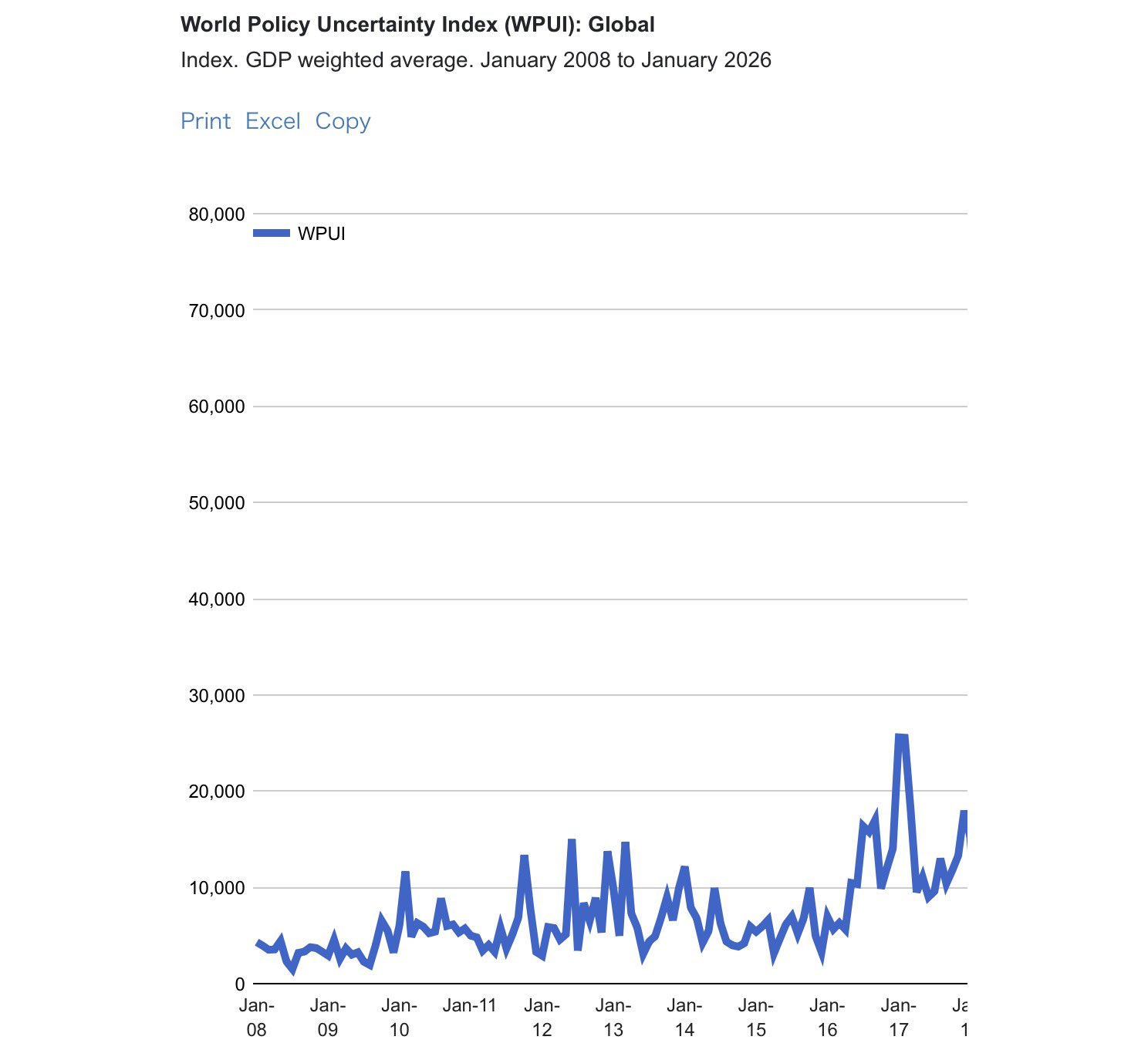
3️⃣ World Policy Uncertainty (WPUI) — Governments Are Guessing
This measures uncertainty specifically around economic policy.
And it’s elevated.
High policy uncertainty means:
• Rate path unclear
• Fiscal direction unclear
• Regulatory shifts unpredictable
• Trade rules unstable
When governments look unsure, capital slows down.
Companies delay investment.
Markets demand higher risk premiums.
Volatility increases.
Crypto historically thrives when confidence in policy weakens — but only after liquidity conditions stabilize.
⸻
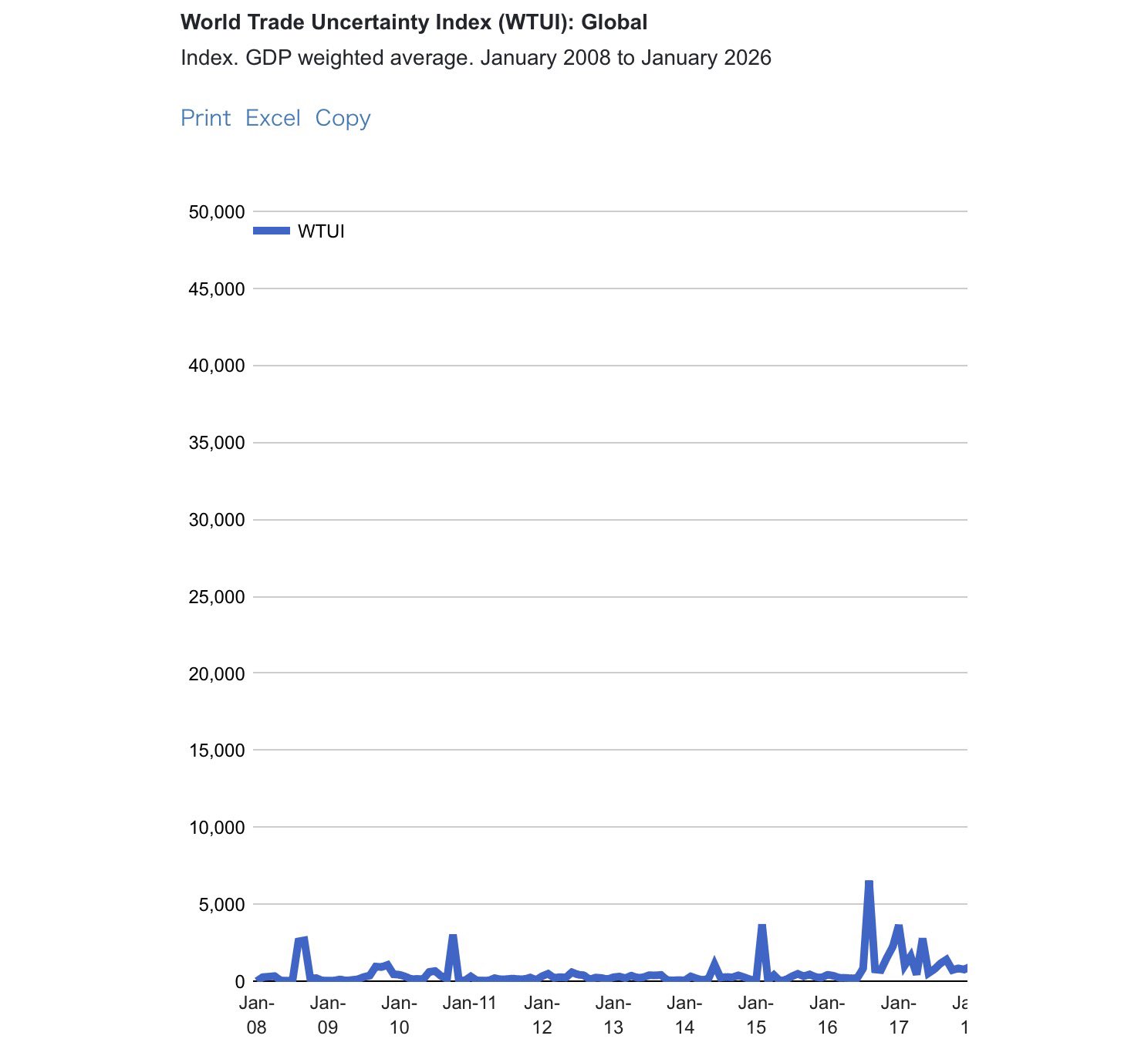
4️⃣ World Trade Uncertainty (WTUI) — Globalization Under Stress
Trade uncertainty spikes mean:
• Tariffs
• Supply chain fragility
• Geopolitical tension
• Bloc formation
Trade friction increases inflationary risk and reduces global efficiency.
That’s not great for growth.
But it’s very relevant for:
• Commodities
• Energy
• Bitcoin as a non-sovereign hedge narrative
⸻
What This All Means Together
Here’s the synthesis:
🌍 Global uncertainty = Extremely high
🙂 Sentiment = Surprisingly positive
🏛 Policy clarity = Weak
🚢 Trade stability = Fragile
That combination is not random.
It suggests we’re in a structurally unstable but liquidity-supported environment.
This is classic late-cycle macro:
• High volatility risk
• Narrative-driven markets
• Sharp rotations
• Fragile confidence
When uncertainty spikes this hard, something usually breaks within 6–18 months.
Not guaranteed.
But historically? The system doesn’t just absorb that kind of stress quietly.
⸻
Why Crypto Investors Should Care
Crypto doesn’t live in a vacuum.
High uncertainty environments historically create:
Phase 1: Risk-off
Phase 2: Liquidity response
Phase 3: Hard asset bid (gold, BTC)
If central banks are forced to respond to instability with easing…
That’s when asymmetric upside reappears.
But before that? Expect chop. Violent chop.
This is not a “sleep well and forget it” macro setup.
It’s a “stay alert, manage risk, watch liquidity like a hawk” setup.
⸻
Zoom out.
We’re not in a calm, stable global regime.
We’re in a high-uncertainty, high-optimism paradox.
And those don’t coexist forever.
Smart capital prepares before the regime shifts.
Not after.
Stay sharp
. 🧠🔥
#Macro #Crypto #
Bitcoin #
Markets #Global
Economy #In
vesting #RiskManagement