Nishant dev
Nishant dev @nishantdevx ·
🚀 Day 26/30: Database Sharding When one DB becomes a bottleneck → shard the data. Split records across multiple databases using a shard key. But beware: Sharding increases massive operational complexity. Use only when scaling demands it. #systemdesign #databases #Day26
5

iddu
iddu @1drie5 ·
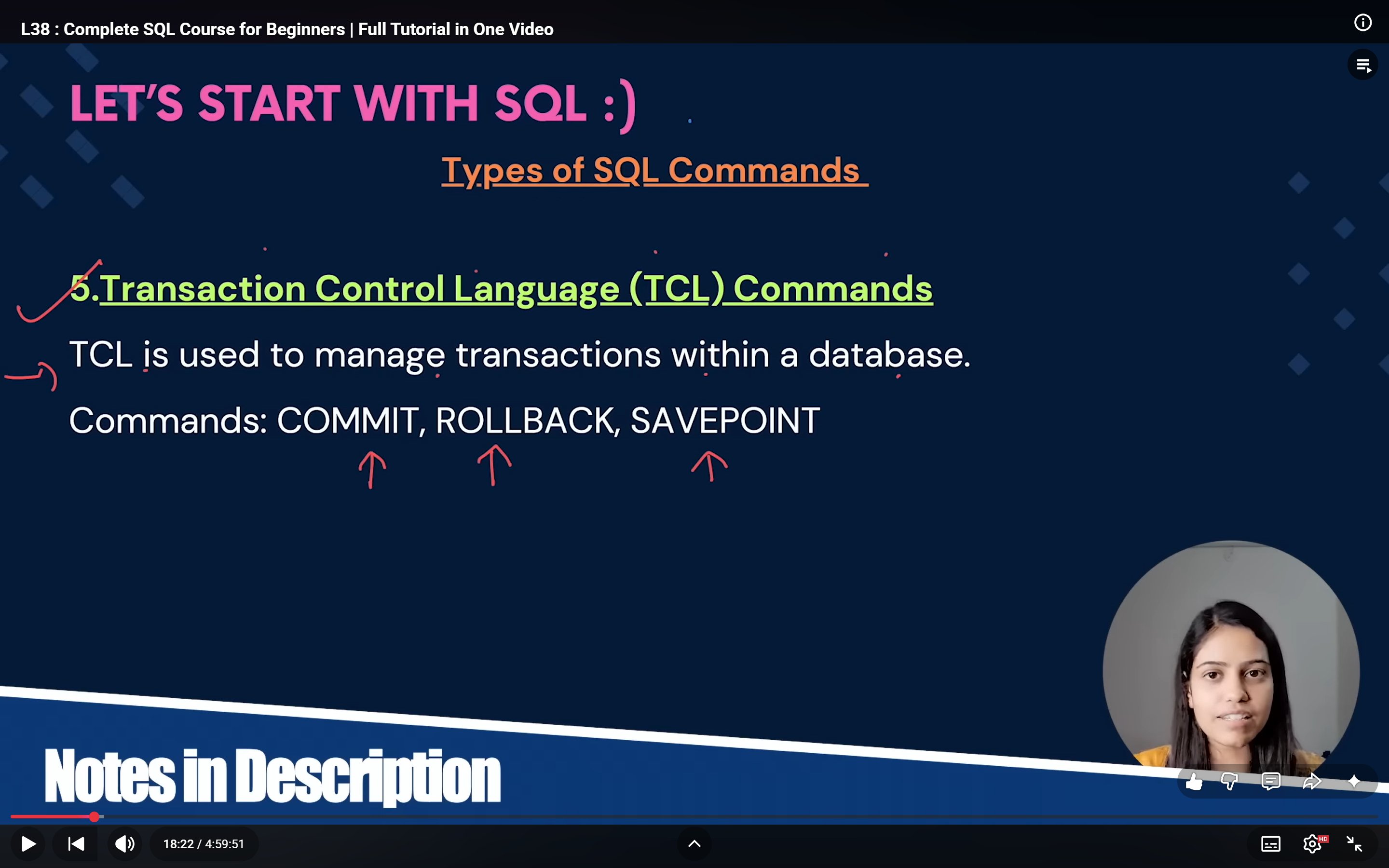
L38 (3–4) sql commands categorized: dql → select dml → insert, update, delete ddl → create, alter, drop, truncate, rename dcl → grant, revoke tcl → commit, rollback, savepoint knowing the category tells you what the command does before you even run it. #DBMS #SQL #Databases
iddu iddu @1drie5 ·
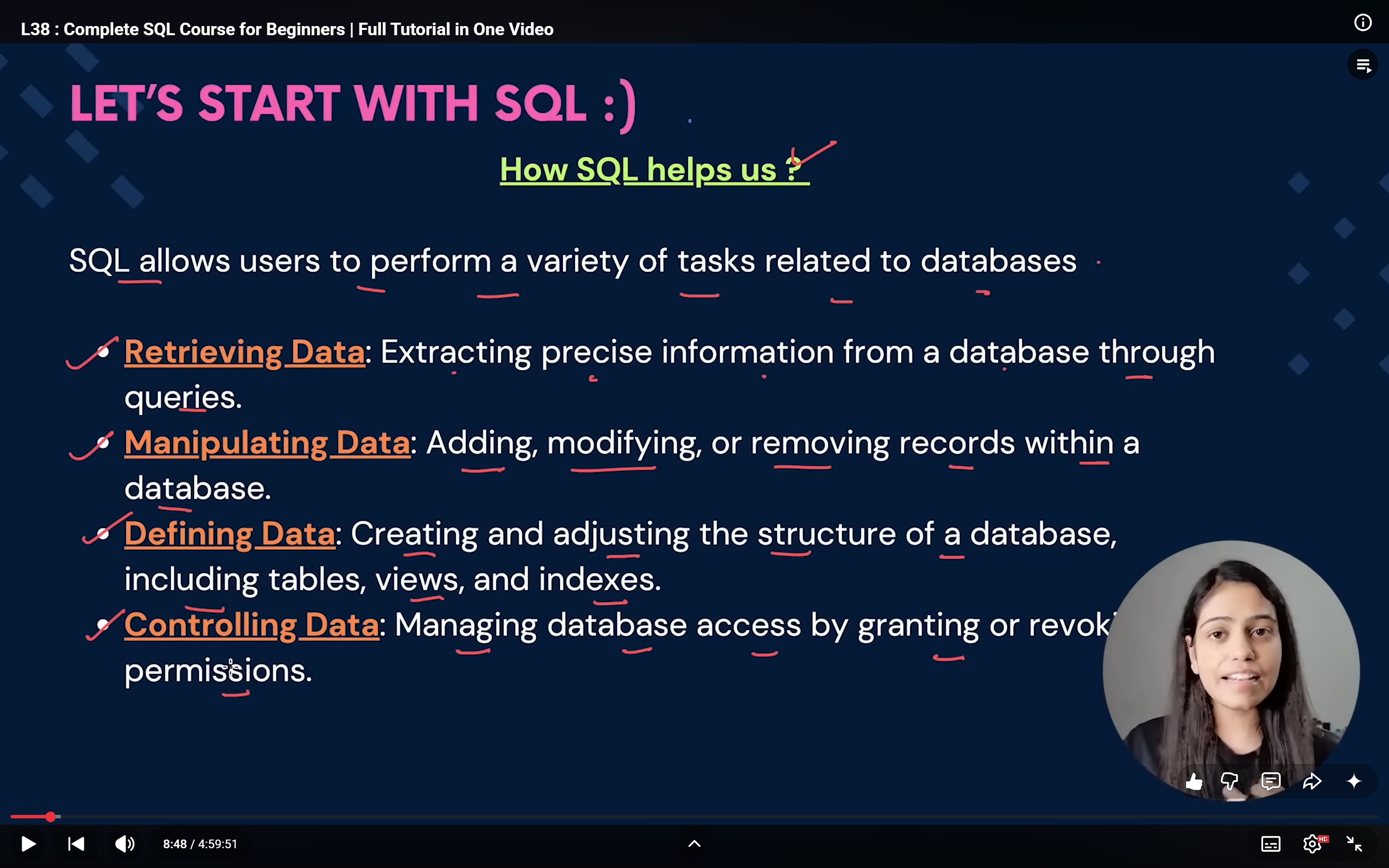
L38 (1–2) sql = language to interact with databases. crud: create, read, update, delete. mysql ≠ sql. mysql is an rdbms that uses sql. sql started as sequel at ibm in the 70s. renamed due to trademark issues. sql: retrieve, manipulate, define, control. #DBMS #SQL #Databases
44
Logicata
Logicata @LogicataCloud ·
AWS says it has been positioned highest in execution in Gartner’s latest Magic Quadrant for Cloud Database Management Systems for the 11th consecutive year via Ganapathy (G2) Krishnamoorthy and Colin Lazier on AWS aws.amazon.com/blogs/database… #aws #AWSCloud #Databases #AmazonAurora
AWS positioned highest in execution in the latest Gartner Magic Quadrant for Cloud Database...

AWS has been named a Leader for the 11th consecutive year in the 2025 Gartner Magic Quadrant for Cloud Database Management Systems. And, once again, AWS has been positioned highest among all 20...

From aws.amazon.com
5
iddu
iddu @1drie5 ·
L38 (1–2) sql = language to interact with databases. crud: create, read, update, delete. mysql ≠ sql. mysql is an rdbms that uses sql. sql started as sequel at ibm in the 70s. renamed due to trademark issues. sql: retrieve, manipulate, define, control. #DBMS #SQL #Databases
iddu iddu @1drie5 ·
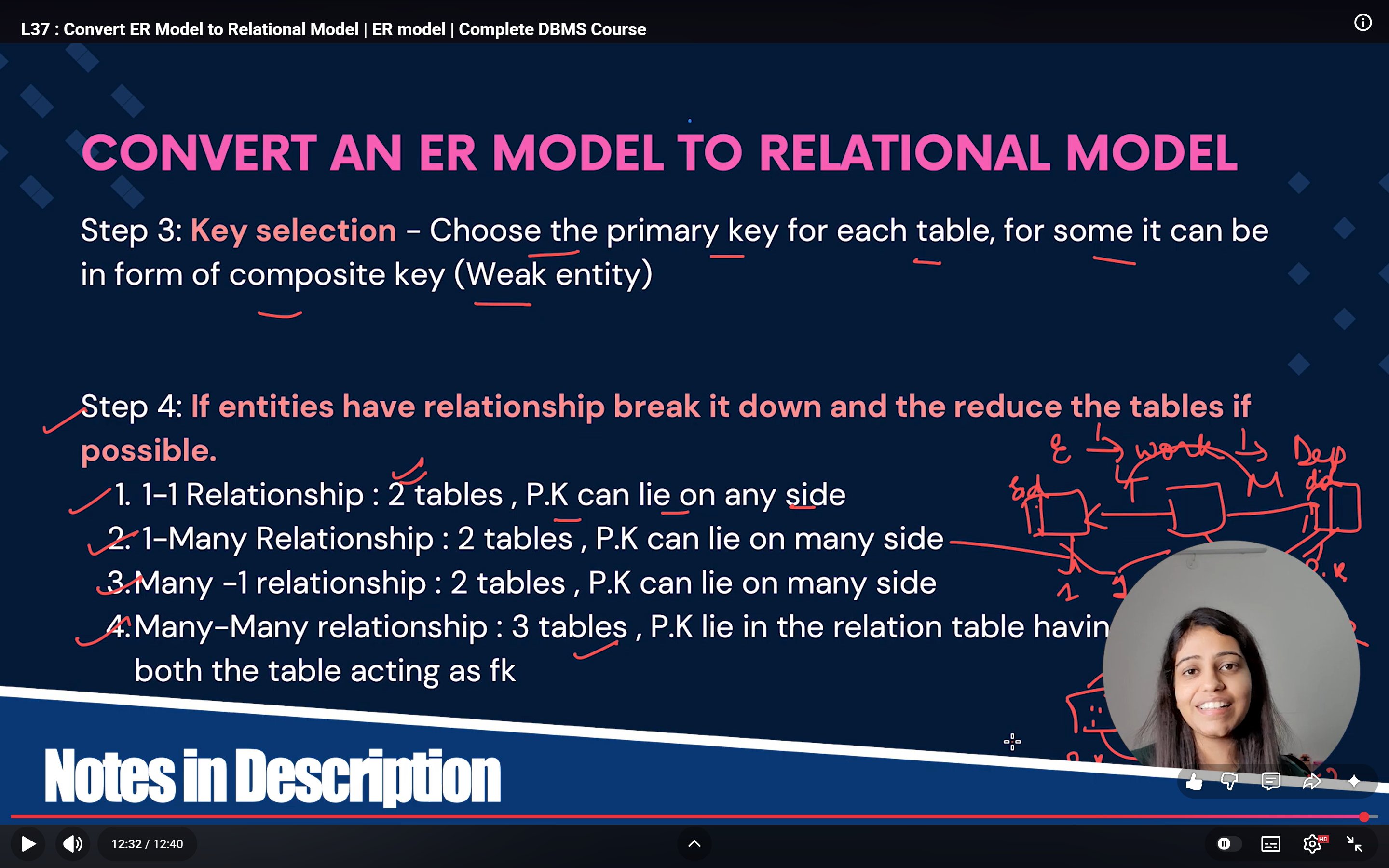
L37 er → relational model conversion. strong entity = own table. weak entity = composite pk (partial key + fk). multivalued attribute = separate table. 1:1 → 2 tables. 1:n → fk on many side. n:n → 3 tables with junction table. #DBMS #SQL #Databases
84
Alejandro Duarte
Alejandro Duarte @alejandro_du ·
Replying to @alejandro_du
"Inner product is not a proper distance [function] (as it does not have a minimum when a vector is compared to itself), and it is only used as a hack [...] in those #databases" 🧵
1
48
iddu
iddu @1drie5 ·
L37 er → relational model conversion. strong entity = own table. weak entity = composite pk (partial key + fk). multivalued attribute = separate table. 1:1 → 2 tables. 1:n → fk on many side. n:n → 3 tables with junction table. #DBMS #SQL #Databases
iddu iddu @1drie5 ·
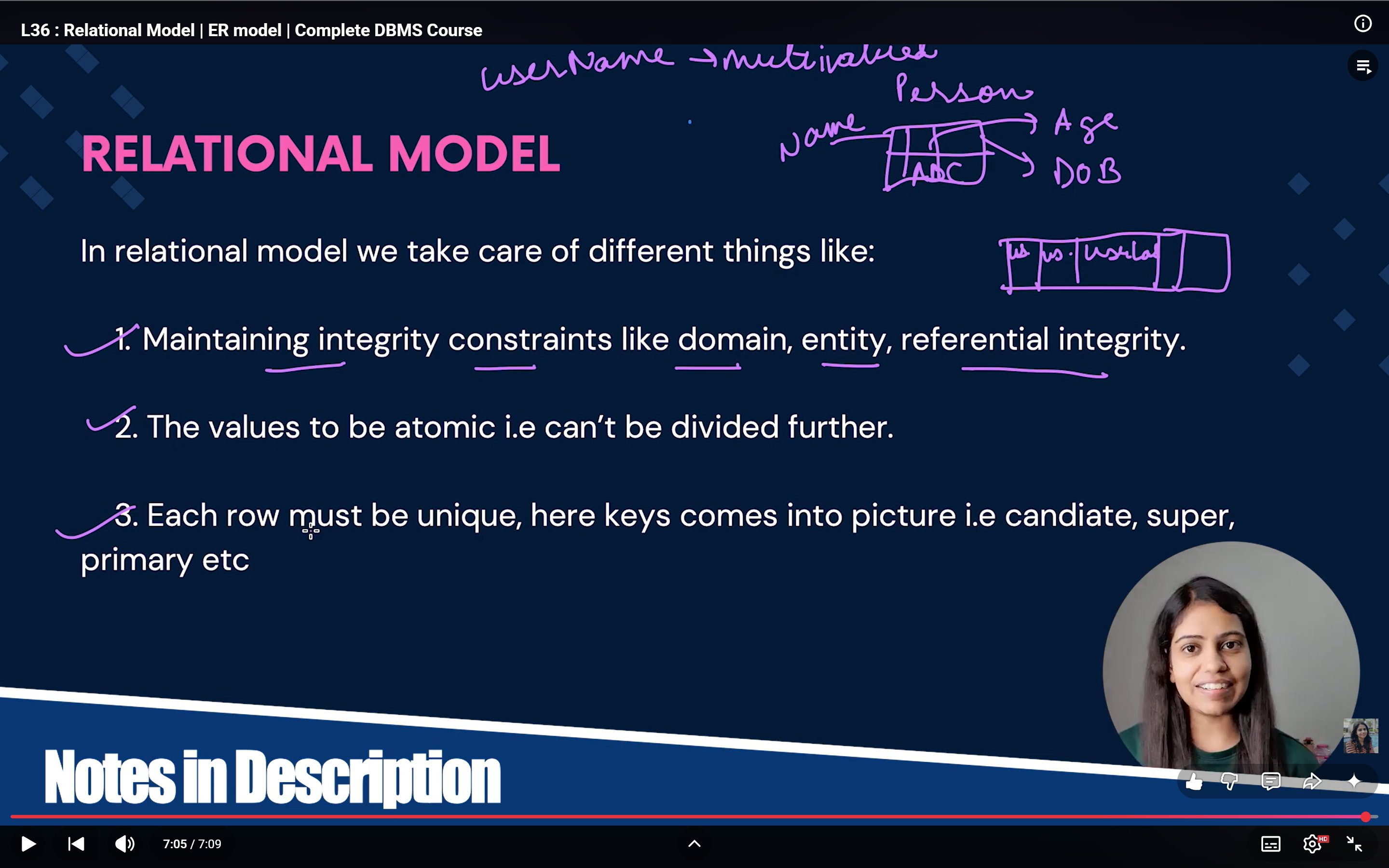
L36 relational model = data in tables, with relationships represented via fk and integrity enforced. table = relation. row = tuple. column = attribute. degree = cols. cardinality = rows. core rules: atomic values. unique rows (keys). integrity constraints. #DBMS #SQL #Databases
75
iddu
iddu @1drie5 ·
L36 relational model = data in tables, with relationships represented via fk and integrity enforced. table = relation. row = tuple. column = attribute. degree = cols. cardinality = rows. core rules: atomic values. unique rows (keys). integrity constraints. #DBMS #SQL #Databases
iddu iddu @1drie5 ·
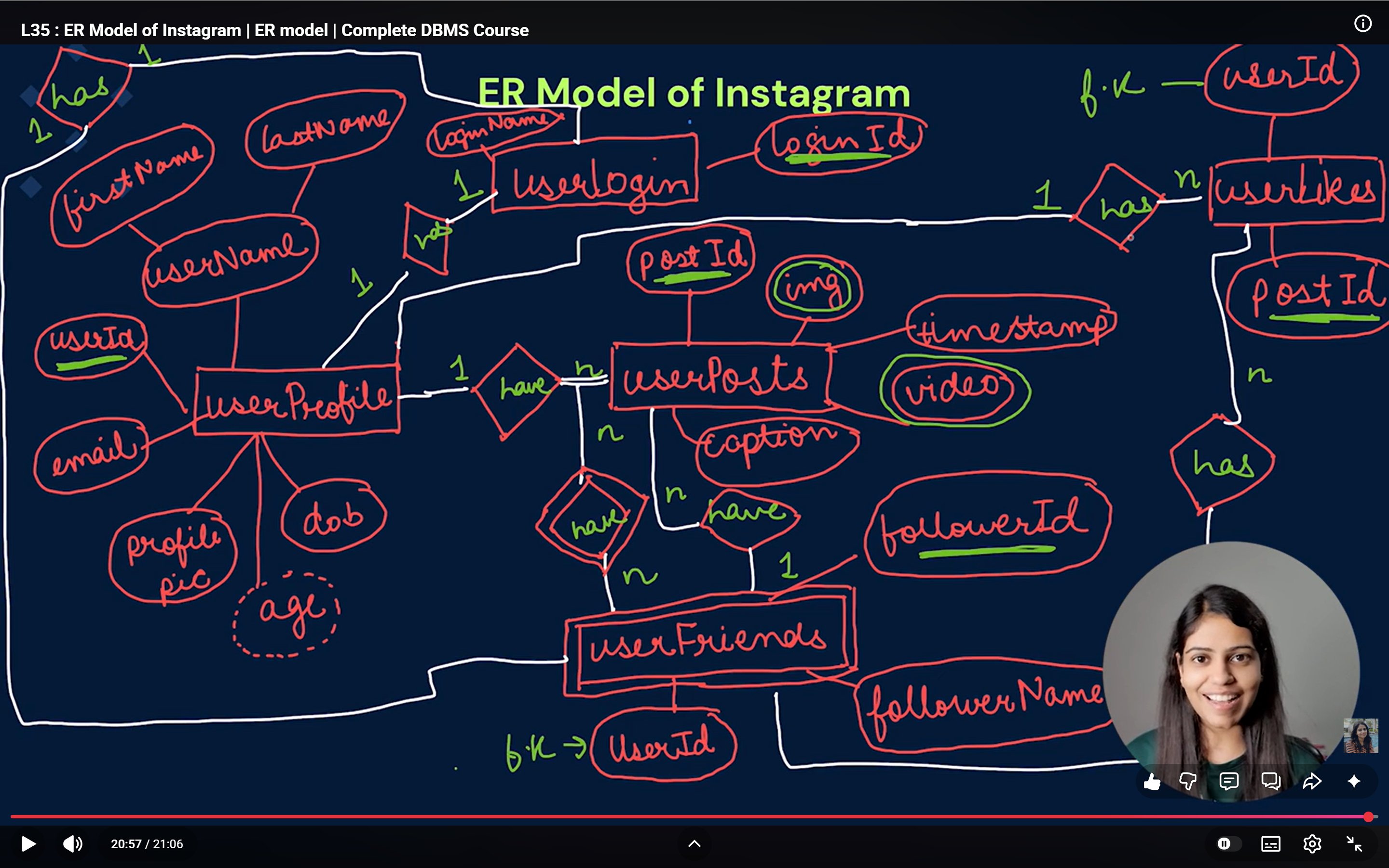
L35 applied er modeling on instagram. entities: userprofile, userfriends, userpost, userlogin, userlikes. userprofile → userpost (1:n). userprofile → userlogin (1:1). userfriends (n:n). theory hits different when you map something you use every day. #DBMS #SQL #Databases
60
Baserow
Baserow @baserow ·
𝐒𝐩𝐫𝐞𝐚𝐝𝐬𝐡𝐞𝐞𝐭 𝐯𝐬 𝐁𝐚𝐬𝐞𝐫𝐨𝐰 📊 🔴 Spreadsheets store data. 🔵 Baserow structures it. Your team deserves more than rows and columns — it deserves connected data, clear relationships, and workflows that scale. #Baserow #Spreadsheets #Databases #WorkManagement
129
iddu
iddu @1drie5 ·
L35 applied er modeling on instagram. entities: userprofile, userfriends, userpost, userlogin, userlikes. userprofile → userpost (1:n). userprofile → userlogin (1:1). userfriends (n:n). theory hits different when you map something you use every day. #DBMS #SQL #Databases
iddu iddu @1drie5 ·
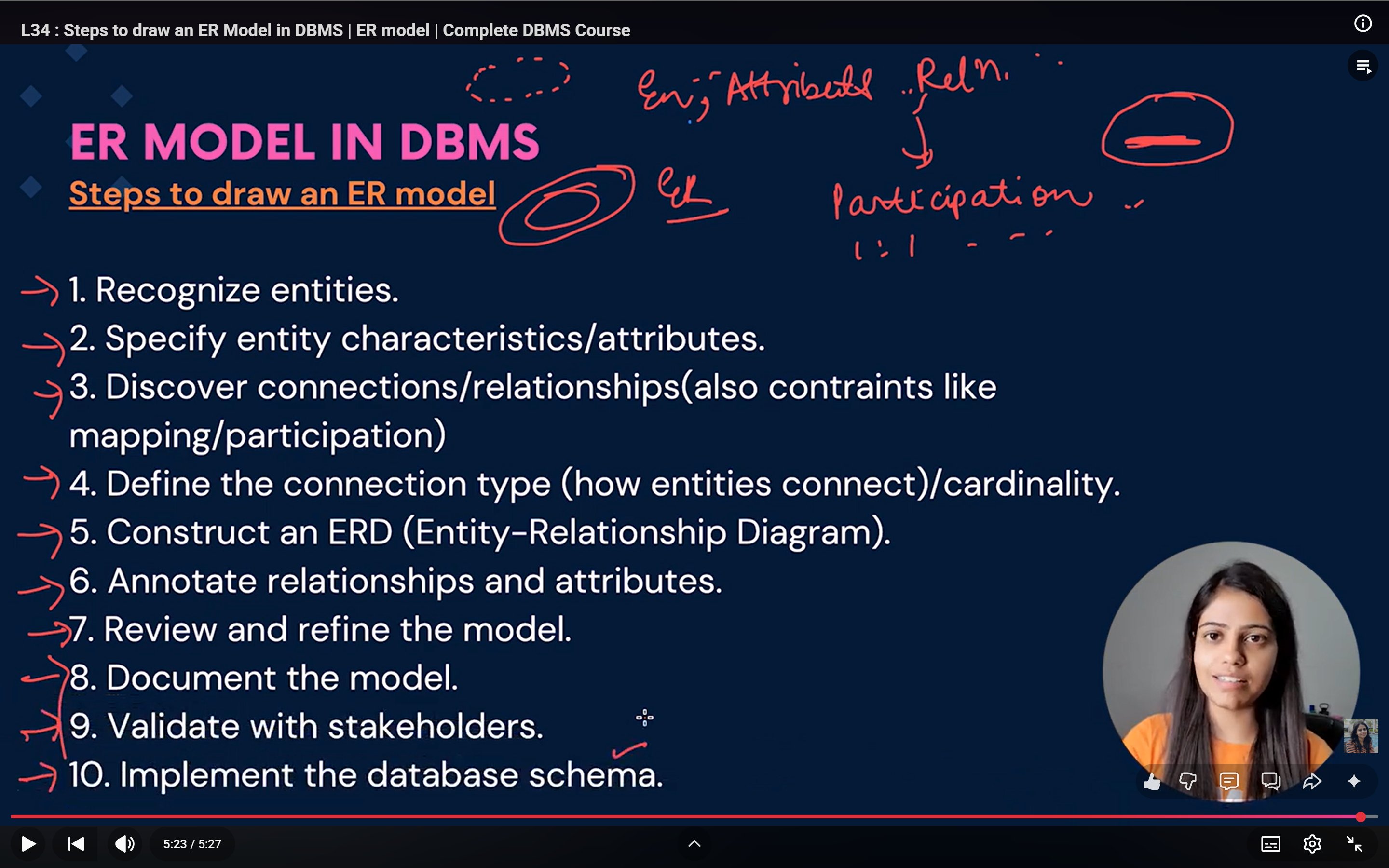
L31–L34 specialization = top-down. supertype → subtypes. ex: person → employee, customer. generalization = bottom-up. subtypes → supertype. ex: laptop, mobile → device. both support inheritance. aggregation = treating a relationship as an entity. #DBMS #SQL #Databases
73
iddu
iddu @1drie5 ·
L31–L34 specialization = top-down. supertype → subtypes. ex: person → employee, customer. generalization = bottom-up. subtypes → supertype. ex: laptop, mobile → device. both support inheritance. aggregation = treating a relationship as an entity. #DBMS #SQL #Databases
iddu iddu @1drie5 ·
L29–L30 participation constraints = mandatory or optional involvement. total: every entity must participate. ex: every employee belongs to a dept. partial: optional. ex: not every employee manages a project. eer: specialization, generalization, aggregation. #DBMS #SQL #Databases
100
Anupam
Anupam @anupamio ·
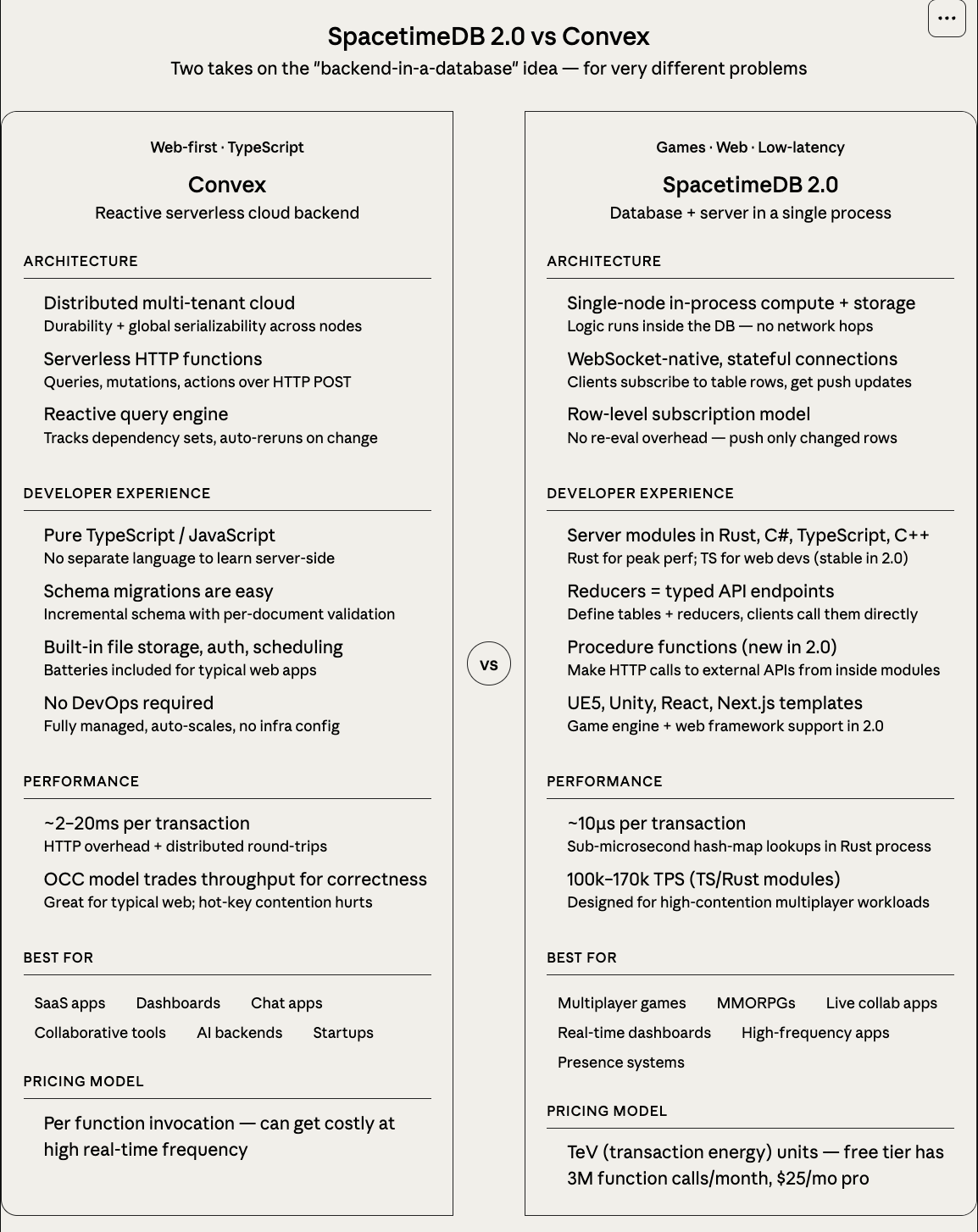
SpacetimeDB feels perfect for a vibe-coding platform ⚡️ Considering Convex for backend + auth. But is using two DBs overkill? Stick to one or split responsibilities? 🤔 #convex #spacetimedb #databases #vibecodey
41