March 6th is a fairly significant day in American history where the long descent into civil war is concerned.
President James Monroe signed the Missouri Compromise into law on that day in 1820.
This literal compromise measure between North and South divided the territory na Purchase along slavery lines at the northern border of Missouri.
Slavery was barred from the territory north of that line, and allowed to the south of it.
Missouri was also admitted into the Union as a slave state, with Maine simultaneously admitted as a free state, thereby maintaining the precarious north-south balance in the U.S. Senate.
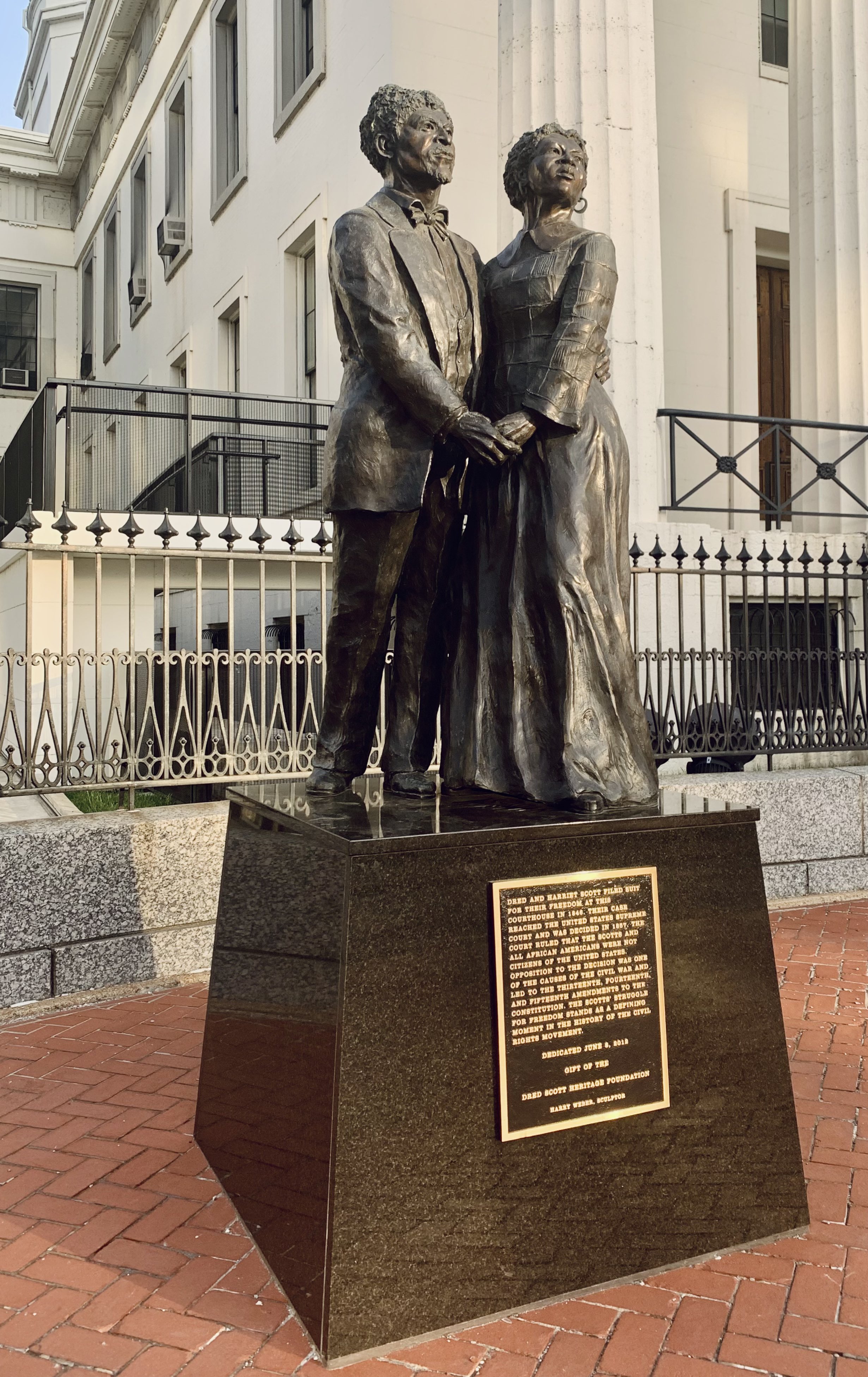
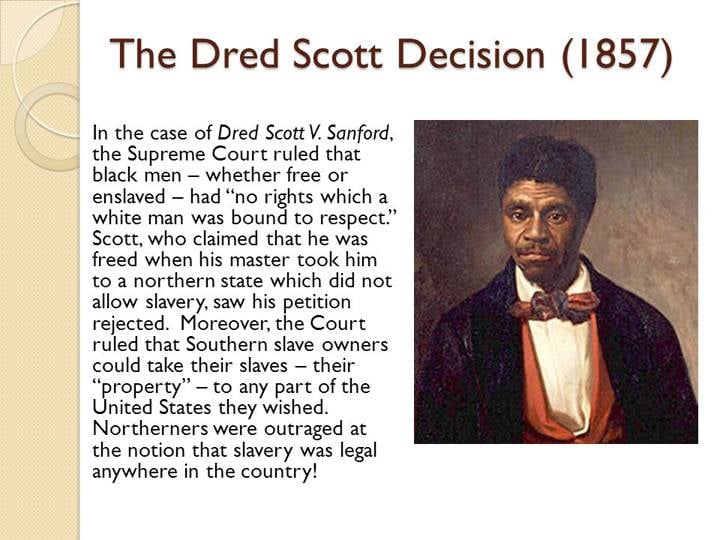
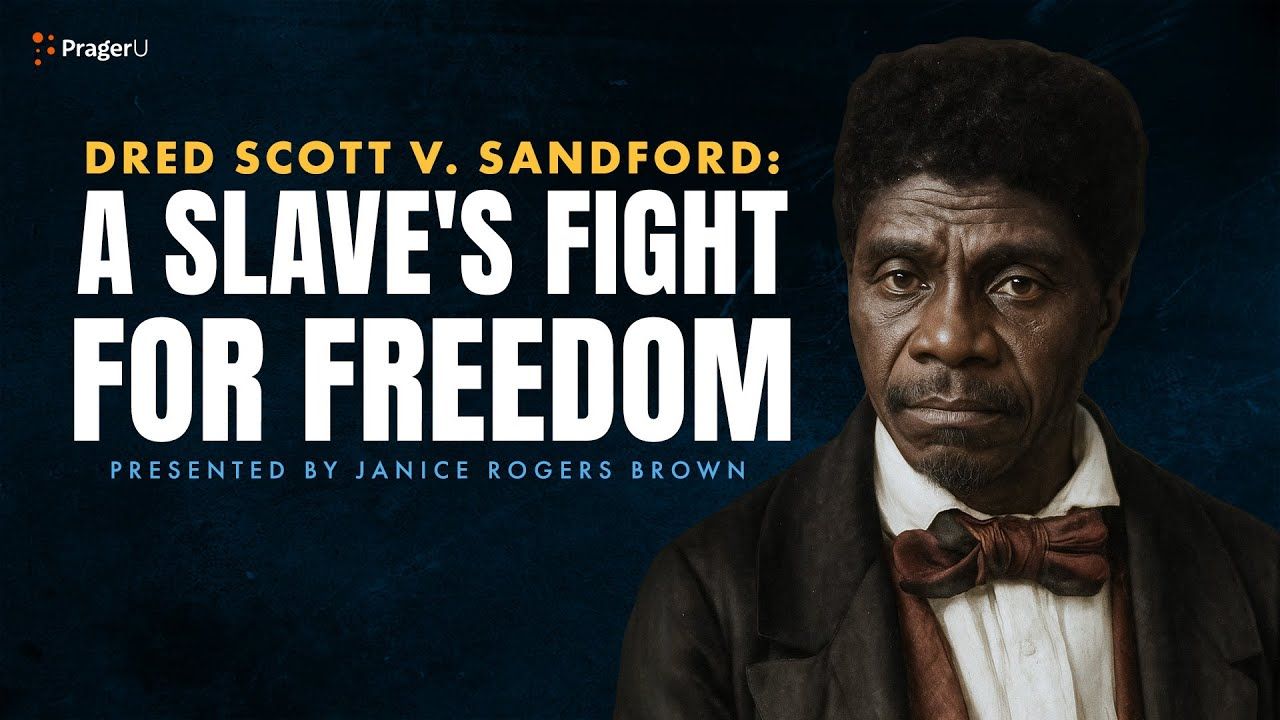
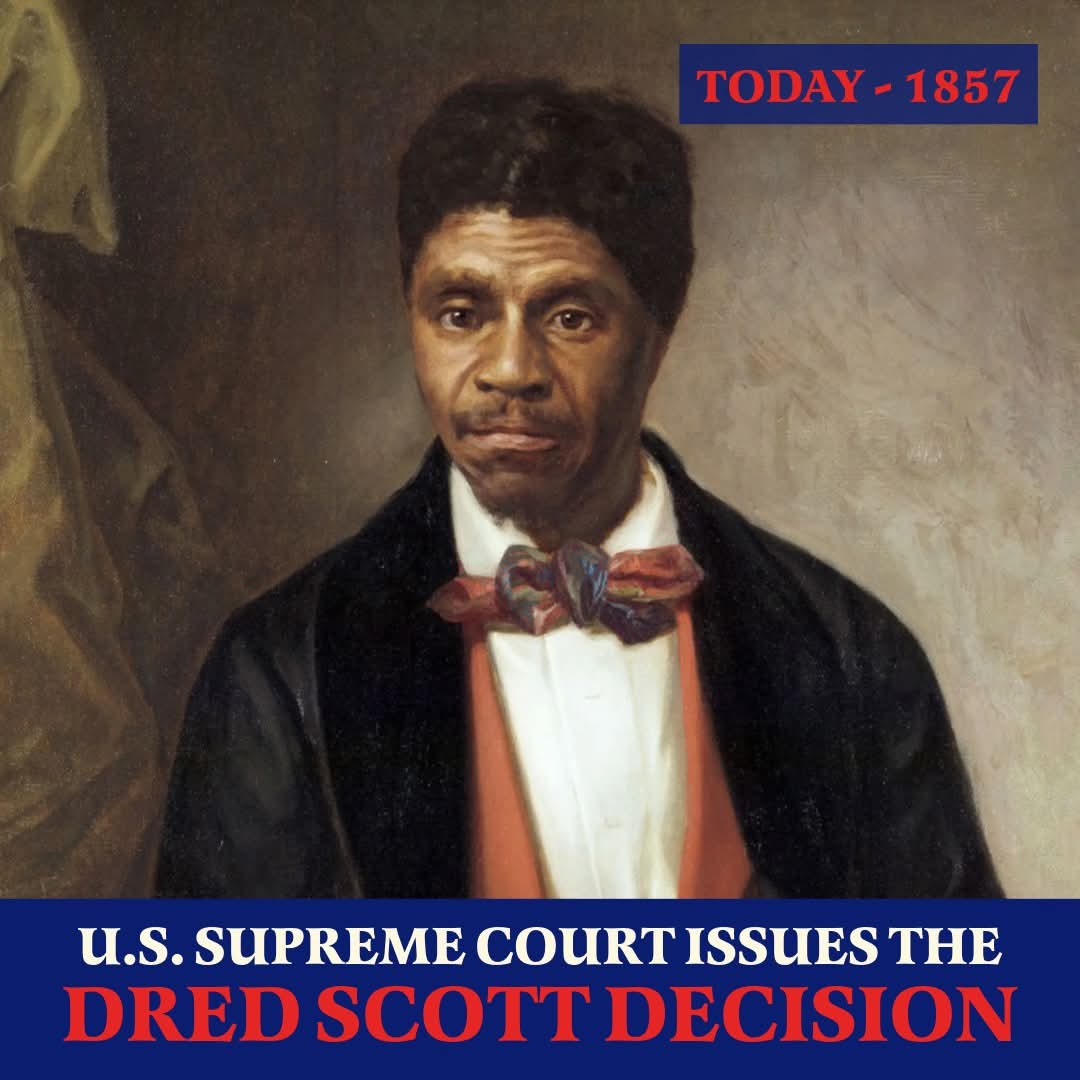
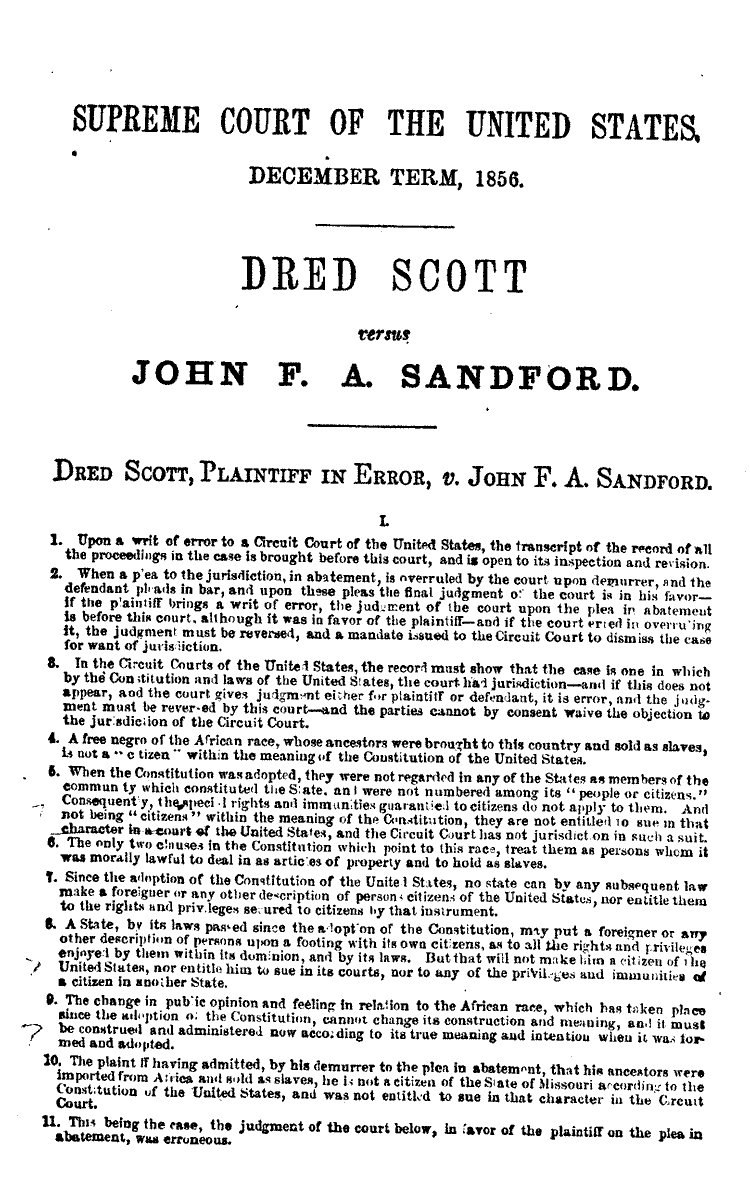
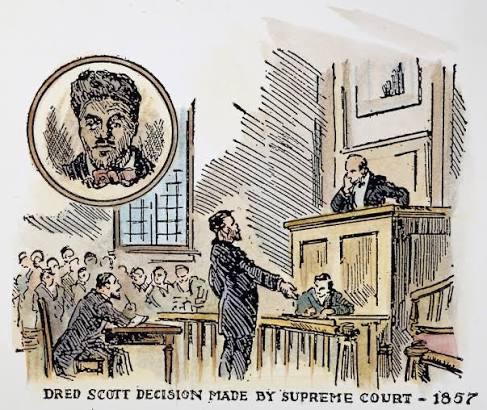
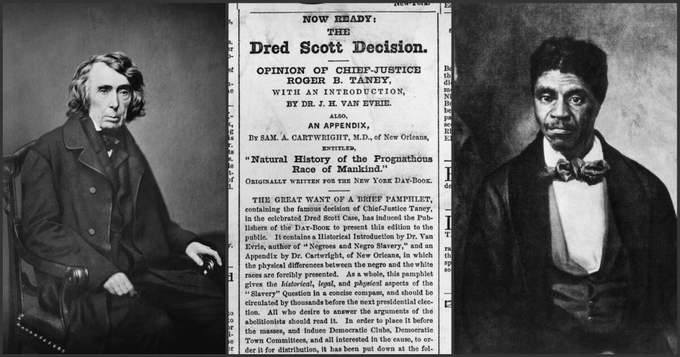
On the same date in 1857 the U.S. Supreme Court handed down its infamous Dred Scott Decision.
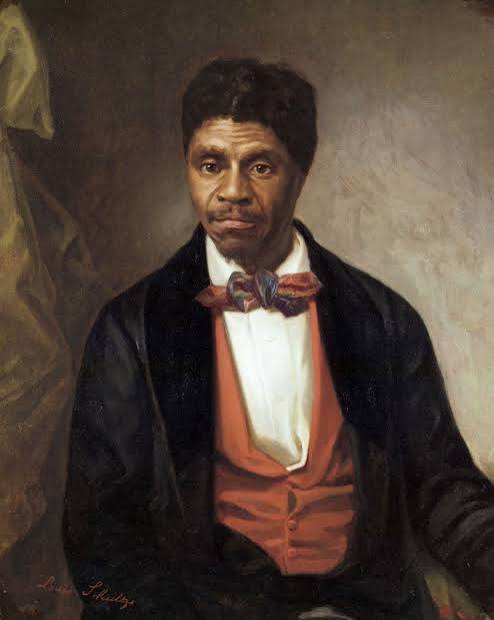
Scott was a Missouri slave who's owner had temporarily taken him into the state of Illinois and the territory of Wisconsin. Slavery was illegal in both places.
Scott had sued for his freedom on that basis, claiming that living in a free state or territory, even temporarily, entitled him to his freedom.
The contentious and widely followed case eventually made it all the way to the Supreme Court.
In 7-2 ruling the Court rejected Scott's claim.
Chief Justice Roger Taney took things a very large step further.
In his written opinion for the majority, Taney outlined three major points.
First, black people, free or slave, could not be considered U.S. Citizens and therefore could not legally bring a case before a federal court.
In other words, according to the Chief Justice, Dred Scott had no standing to even be there.
Second, that barring slavery from the Louisiana Purchase territory, as the Missouri Compromise had done, was unconstitutional.
And third, that neither the federal government nor territorial governments had the authority to ban slavery.
This last ruling in effect said that slaves could be taken into territories and states where slavery was forbidden, and still remain slaves.
With these last two of his points, Taney had ruled on issues that were not actually before the Court.
In doing so, he was attempting to put an end to the longstanding sectional controversy over slavery, coming solidly down on the southern side of the debate.
As it played out in reality, his infamous ruling was the equivalent of throwing gasoline on an already strong fire.
A fire that was threatening to consume the entire country.
As for Dred Scott himself, often overlooked in the uproar over the ruling that bears his name, he and his family were, ironically, legally granted their freedom by their owners shortly after the court case ended.
Scott would not be granted much time to enjoy his freedom, dying of tuberculosis in September of 1858. His personal and very human story lost amidst the rapidly gathering national storm.
Below left: Map of the Missouri Compromise, from JSTOR. Center: Dred Scott, probably taken in 1857, from Wikipedia. Right, Dred Scott's grave in St. Louis, from his Find A Grave page.