As the world marks
#DataPrivacyDay, it’s worth pausing to ask some hard questions.
How well is our personal data actually protected?
What happens to the personal information we share every day on these platforms?
And what’s really being done to reduce the constant wave of data breaches?
Despite all the promises, users are still exposed every time they go online
We keep hearing about hacks, leaks & privacy violations
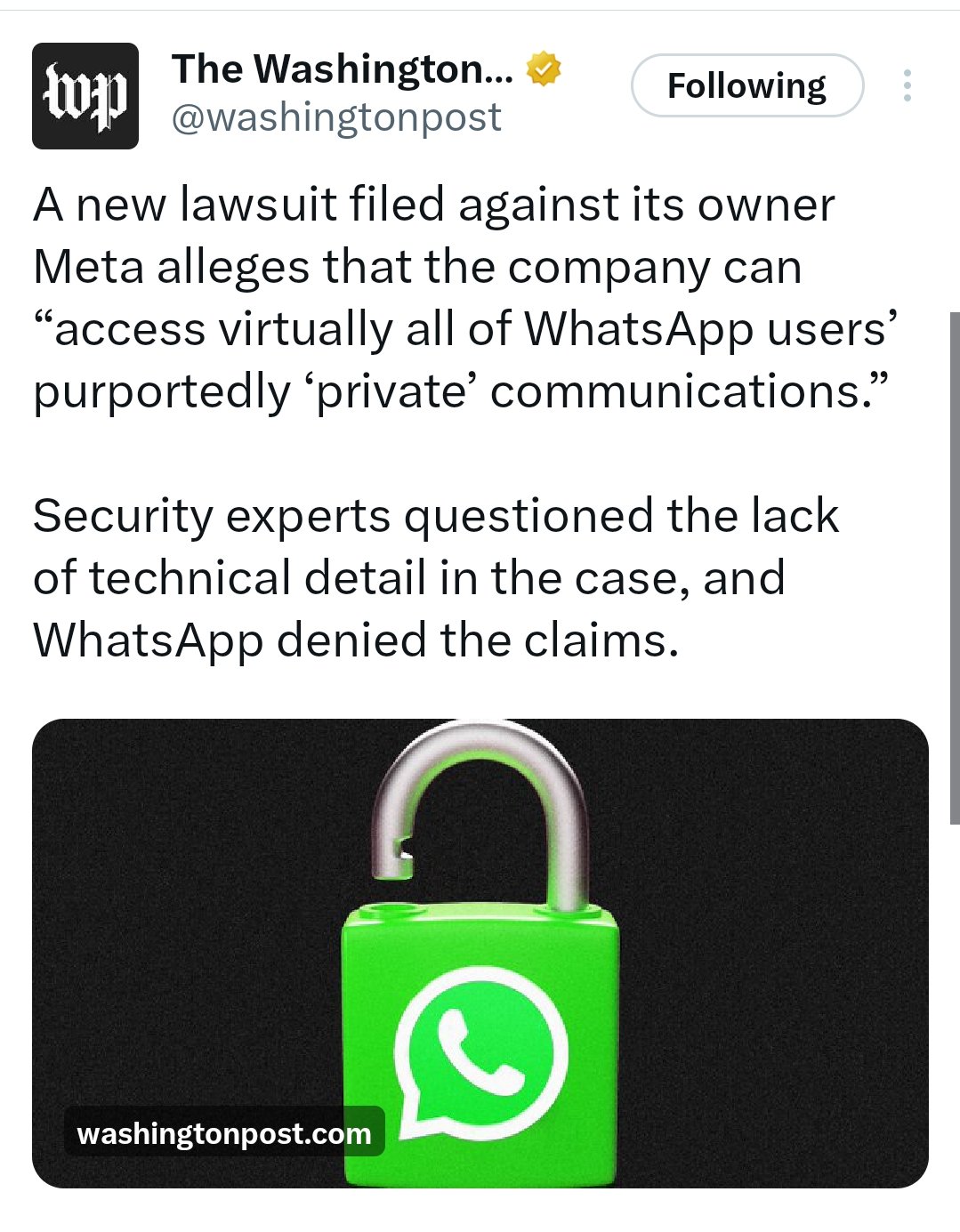
For instance, the recent lawsuit in the US alleging that WhatsApp may not be as end-to-end encrypted as advertised, with claims that Meta could access private messages through internal tools.
Meta has denied this, saying message content can’t be read on their servers, even though metadata is still visible
Regardless of who’s right, the conversation it sparked on X shows one thing clearly: trust in “privacy guarantees” is shaky.
And this isn’t just a Web2 problem
Web3 platforms have also been called out for falling short on privacy, even with better tools and clearer regulations.
That’s why privacy-first tech like zero-knowledge proofs is no longer a nice-to-have.
It’s becoming a MUST.
Users should start paying attention to platforms that actually use these tools & hold them accountable
We shouldn’t have to worry that simply using a platform today could hurt us tomorrow.
Governments at all levels also have a role to play
Stronger rules & real enforcement are needed to protect users online.
The big question is: will we ever truly get privacy right?
Well yes, progress is being made.
For example,
@Concordium is building solutions and partnerships around zero-knowledge proofs to fix some of the real privacy gaps users face online today.
However, your safety online is your sole responsibility, so mind what you share with platforms and third parties.