A Divided Front: The Global Response to the Strait of Hormuz
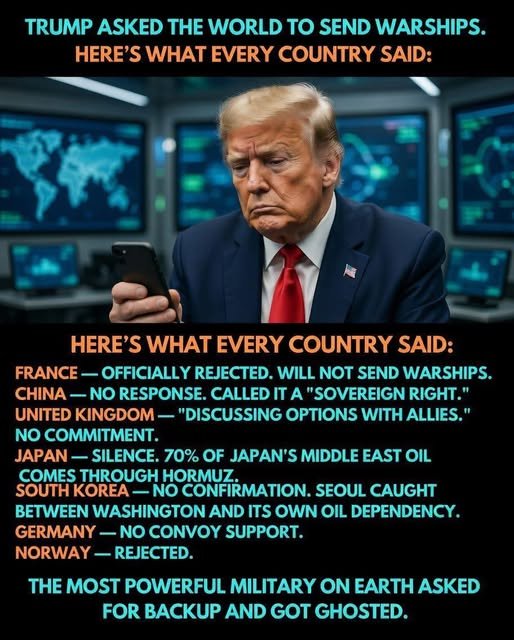
Rising tens_ions around the Strait of Hormuz have prompted the United States to seek support from international partners for maritime sec_urity operations. However, global responses have been cautious and, in many cases, non-committal.
European and Asian Reluctance
* France has indicated reluctance to participate in U.S.-led na_val operations, instead emphasizing the need for de-escalation and independent European coordination.
* China has avoided direct commitments, framing the issue as tied to regional sovereignty and calling for diplomatic solutions.
* The United Kingdom has stated it is consulting with allies but has not confirmed any deploy_ment.
* Japan and South Korea—both heavily dependent on energy shipments through the strait—have remained cautious, balancing energy sec_urity concerns with their alliances.
* Germany has ruled out participation in convoy missions, while Norway has also signaled it will not contribute na_val forces.
*Canada has rejected the offer.
Regional Concerns from Energy Producers
In the Gulf, energy producers are expressing concern about potential disruptions. Qatar has warned that instability could affect global gas supplies, while officials in the United Arab Emirates have highlighted prior efforts to avoid escalation due to risks to global energy markets.
The Stance from Ir/an
Meanwhile, Ir/an has been accused by Western officials of actions that threaten maritime sec_urity, including interference with commercial shipping. Tehran has typically denied such allegations and maintains that it is safeguarding its own interests in the region.
Summary of the Stalemate
Overall, the situation reflects the difficulty of building a unified international response. While discussions are ongoing, there is no clearly defined multinational na_val coalition at this stage, underscoring widespread concern about being drawn into a broader regional w/ar or conflict.