
THE4Rs OF FERTILIZER AAPPLICATION: Feed Your Crops, Not Your Problems
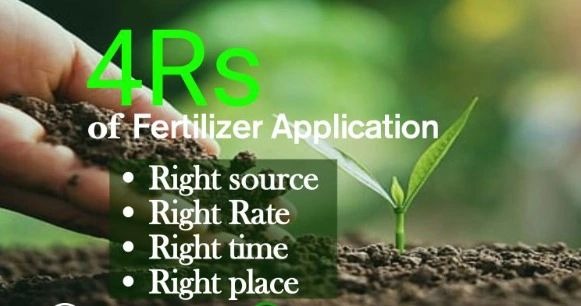
Fertilizer is one of the single largest input costs in crop production. Yet a significant portion of what farmers apply never reaches the plant. It leaches into waterways, volatilizes into the air, or sits in oil at the wrong time. The 4R framework Right Source, Right Rate, Right Time, and Right Place exists to close that gap between what you spend and what your crop actually receives.
Right Source
Not all fertilizers are created equal, and not all crops respond to the same nutrient form. Choosing the right source means matching the fertilizer type to the crop's nutritional needs, the soil chemistry, and the local climate. A nitrogen source that works well in a cool, dry environment may volatilize rapidly in a hot, humid one. Soil testing is the foundation of source selection without knowing what your soil already holds, you are essentially guessing.
Right Rate
Applying more fertilizer than a crop can use does not produce a bigger harvest. It produces waste, environmental damage, and unnecessary expense. The right rate is determined by realistic yield targets, existing soil nutrient levels, and the crop's uptake capacity at each growth stage. Over-application of nitrogen, for example, encourages excessive vegetative growth at the expense of fruiting, while under-application limits yield potential significantly. Regular soil and tissue testing keeps your rates calibrated to actual field conditions.
Right Time
Nutrients applied at the wrong growth stage are largely unavailable when the crop needs them most. Nitrogen applied too early can be lost before canopy establishment. Phosphorus applied after root development peaks has limited uptake pathways. Timing fertilizer applications to coincide with active growth periods and peak demand windows maximizes efficiency and return on investment. Split applications dividing the total dose across multiple stages are often more effective than a single heavy application.
Right Place
Where you place fertilizer in relation to the root zone determines how accessible it is to the plant. Broadcast applications suit some nutrients and crops well, while band placement near the seed or root zone is more efficient for others, particularly phosphorus in low-mobility soils. Deep placement of urea reduces volatilization losses significantly compared to surface broadcasting.
The Bottom Line
The 4Rs are not just an environmental best practice they are a profitability strategy. Apply smarter, spend less, and grow more.
1
1
92