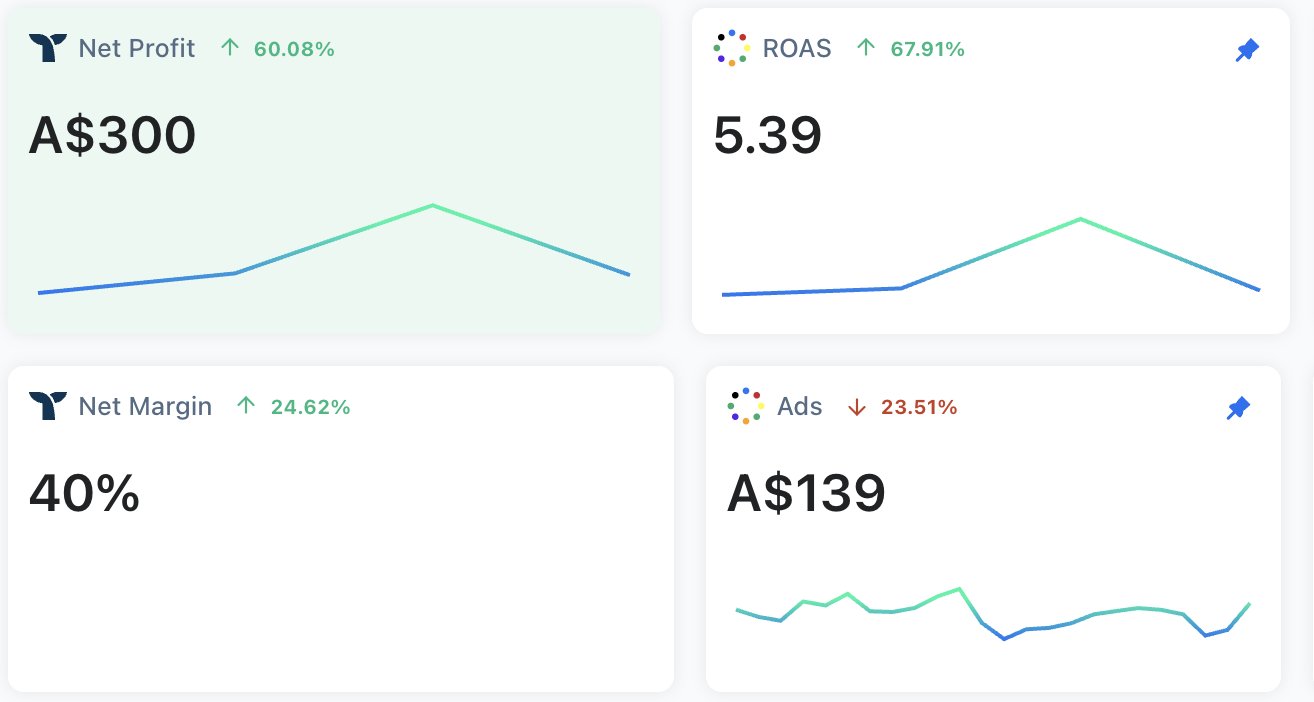
I've blown through roughly $100M in Meta ad spend across 50+ ecom brands.
Some made millions. Some burned to the ground.
Here's what actually separates the winners from the "why did we even try this" stories.
---
First, the thing nobody wants to hear:
Your product doesn't matter as much as you think it does.
I've scaled a $2 jump rope to $500K/month in revenue. I've also dumped $50K into promoting a legitimately amazing product that just... never clicked.
The difference wasn't the product. It was the MESSAGING.
---
Here's what I mean.
Brand A: Sold premium dog beds. The owner kept running ads with lifestyle shots of dogs sleeping.
Brand B: Sold the EXACT same dog beds. Different founder ran ads about "the vet-approved solution that stops your dog from destroying their joints by age 7."
One scaled to 7 figures. One shut down.
Same product. Different story.
---
Now, the REAL lesson:
Everyone fixates on creative, audience, bidding strategy, placements... (all important, don't get me wrong).
But the brands that actually stuck around?
They obsessed over MESSAGING ANGLES.
Not just \"what's our hook\" but \"who has this problem RIGHT NOW and what do they believe is the actual solution?\"
---
Let me give you three specific angles that printed money across multiple brands:
---
1) The \"Problem They Don't Know They Have\" Angle
This one's gold because most competitors are fighting over the obvious problem.
Example: We were running ads for a meal prep container brand. Everyone else was selling \"meal prep containers.\"
We reframed it: \"The reason your meal prep fails isn't willpower. It's that your containers sweat and make everything soggy by Wednesday.\"
CTR went from 0.8% to 2.1%.
Why? Because we diagnosed a HIDDEN frustration.
The person scrolling wasn't actively searching for containers. They were frustrated that meal prep keeps failing. We solved for that frustration.
---
2) The \"Comparison\" Angle
Don't just tell people why YOUR product is good.
Show them what they're probably doing RIGHT NOW instead.
Example: Fitness brand. Instead of \"our app has AI coaching,\" we ran ads that said \"you're probably paying $200/month for a personal trainer who checks their phone half the session.\"
Then we showed the alternative (our app, $30/month).
Conversion rate jumped 34% because we made the status quo feel stupid.
---
3) The \"Specificity\" Angle
This one kills generic brands.
Instead of \"for everyone,\" pick a SPECIFIC person with a SPECIFIC problem.
We ran ads for a supplement brand. They initially targeted \"people who want better energy.\"
Then we got specific: \"For the 40+ year old who's tired by 2pm but refuses to accept this as normal.\"
We added: \"Not for people who want energy drinks. For people who want to feel like themselves again.\"
Cost per purchase dropped 40%.
Why? Specificity creates self-selection. The right person says \"that's me.\" The wrong person scrolls.
---
But here's where most founders completely miss it:
They think the angle is just the HEADLINE.
No.
The angle is baked into EVERYTHING.
Your creative needs to reinforce it. Your copy needs to reinforce it. Your landing page needs to reinforce it.
If your angle is \"hidden problem\" but your creative shows the product in a vacuum... you've already lost.
---
The brands that scaled fastest did this:
They didn't just change ads.
They changed how they TALKED about their entire product.
From their social content to their website to their customer service responses.
One unified story.
That consistency ---> trust ---> conversions.
---
Now, here's the part that actually keeps me up at night:
Most founders spend 80% of their energy on EXECUTION (platforms, pixel setup, bid adjustments, audiences).
They spend 20% on the thing that actually moves the needle: STRATEGY.
It should be flipped.
---
I watched a founder spend three months perfecting their audience targeting, testing seventeen different lookalike variations, tweaking CPMs by $0.02...
Meanwhile, his messaging was still \"buy this thing.\"
Generic. Forgettable. Mid.
When we finally sat down and rebuilt the angle... (same audience, same budget, same pixel) ... the results tripled.
All that targeting optimization was like arranging deck chairs on the Titanic.
---
So here's what changed for me:
Before I run a single ad for a brand, we now spend 2-3 days just on messaging strategy.
We write out:
- What problem are we solving? (Not the obvious one. The REAL one.)
- Who feels this problem most acutely? (Specific person, specific moment in their life.)
- What do they currently believe is the solution? (and why is it wrong or incomplete?)
- How is our product different in a way that MATTERS to them?
- What will they think six months after buying? (This tells you if you're selling the right angle.)
Then we test messaging variations.
Not creative variations. MESSAGING variations.
---
Example of what I mean:
Same product. Three different angles we tested:
Angle A: \"Premium quality that lasts\" ----> 0.6% CTR, 8% conversion rate
Angle B: \"Built by people who actually use this (not a corporation)\" ----> 1.2% CTR, 11% conversion rate
Angle C: \"The one thing expensive brands get wrong (and why cheaper isn't actually cheaper)\" ----> 1.8% CTR, 14% conversion rate
Angle C won by a mile.
But we would've NEVER tested it if we only tried creative variations.
---
This is the part where most Meta gurus lose me:
They talk about creative fatigue. Hook structure. Hook types. Ad placement optimization.
All useful.
But they're treating symptoms, not the disease.
The disease is weak messaging.
You can have the prettiest creative in the world. If the angle is weak, it doesn't matter.
---
I've also learned something uncomfortable about scaling:
The angle that works for your first $10K in sales might not work for $100K.
Different people buy at different stages.
Early buyers are often problem-aware. They GET IT immediately.
Later buyers? They need education. They need the comparison. They need specificity.
So the brands that really scaled didn't just find ONE angle.
They built a stack of angles and cycled through them based on funnel position.
---
Here's the framework we use:
TOP OF FUNNEL: The \"problem\" angle. Help them realize they have a problem.
MIDDLE OF FUNNEL: The \"solution\" angle. Show them how our product fixes it.
BOTTOM OF FUNNEL: The \"proof\" angle. Give them social proof, guarantees, comparisons.
Each angle needs different creative, different copy, different everything.
Brands that tried to do all three with one ad? They plateaued fast.
---
One more thing that changed my approach:
I stopped asking \"what angle will get the best CTR?\"
Instead I ask: \"what angle will attract the RIGHT customer?\"
Because here's the thing... (and this one hurt to learn)
You can have a 5% CTR and a 2% conversion rate.
Or a 1.5% CTR and a 12% conversion rate.
The second one makes money. The first one doesn't.
High CTR from the wrong angle = you're attracting tire-kickers who weren't going to buy anyway.
Low CTR from the right angle = you're qualifying as you go.
---
So when I audit a brand's Meta ads now, the first question I ask is never \"what's the CTR?\"
It's \"who are these people converting, and what angle got them to convert?\"
Then we double down on that angle and expand to similar audiences.
---
The failures stick with me more than the wins.
I once dumped $200K into ads for a supplement brand because the founder INSISTED his angle was right.
\"People want more energy.\"
I kept saying: that's not specific enough. We need to know who, when, and why their current solution isn't working.
He overruled me.
It tanked.
We pivoted the angle to \"for the parent who's exhausted but won't take stimulants,\" and suddenly it worked.
I learned that day: the best angle usually contradicts what the founder THINKS is the angle.
---
Because founders live inside their product.
They're too close.
They see features. They see specifications. They see the problem they PERSONALLY had that led them to build it.
But customers? They don't care about that origin story.
They care about their own story.
And the angle is where your story intersects with THEIR story.
---
So here's my current operating system for any brand doing Meta ads:
Step 1: Define the angle (2-3 days of thinking, not testing)
Step 2: Test three messaging variations of that angle (creative stays similar)
Step 3: Scale the winning message
Step 4: When CTR drops (fatigue), rotate the creative while keeping the angle
Step 5: Every 30 days, test a completely new angle in a small budget
Step 6: Whichever new angle beats the old winner becomes the new primary
That's it.
That's the whole system.
But most people skip straight to \"let's spend $5K on ad variations\" instead of doing the strategic work upfront.
---
The ROI on that upfront thinking?
Literally 10X.
I'd rather spend three days thinking and three days testing than spend three months testing bad angles.
---
Last thing:
The brands that crushed it didn't have better products. They didn't have more budget. They didn't have better designers.
They had someone (usually the founder) who could articulate EXACTLY why their product mattered to a specific person.
That clarity turned into a message.
That message turned into ads.
That ads turned into sales.
---
If you're running ads and struggling, stop optimizing your placements.
Stop AB testing creative variations.
Stop analyzing your pixel data.
Instead, lock yourself in a room and answer this one question:
\"If I could only tell one true story about my product, what would it be?\"
That story? That's your angle.
That's where the money is.
Everything else is just tactics.
---
Have you found an angle that completely changed your results? Or are you still searching?
Curious what you've tested.