In 17th-century France, a brilliant young mind was already reshaping science.
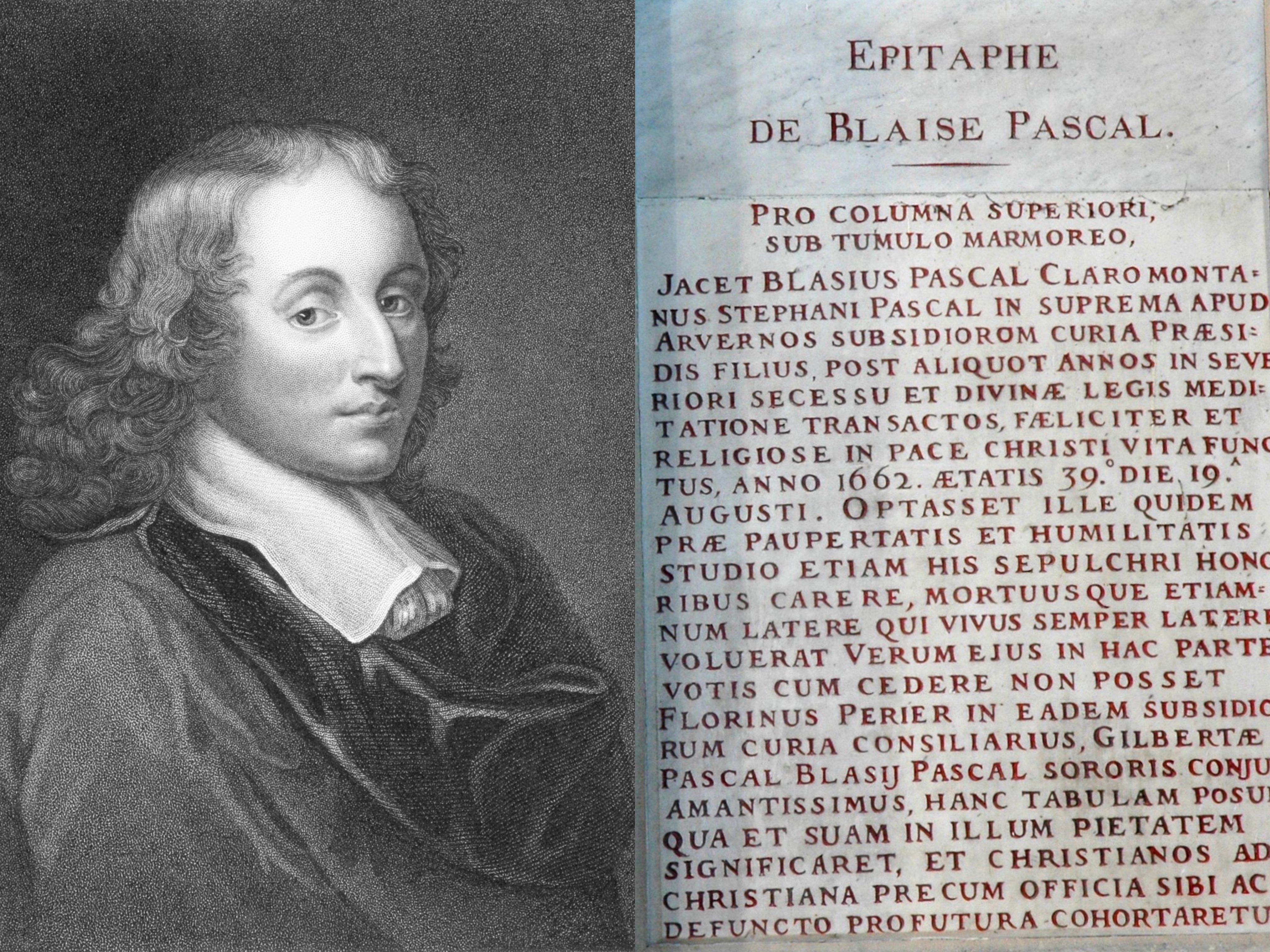
Blaise Pascal—mathematician, physicist, and inventor—uncovered how pressure works, helped lay the foundations of probability, and even built one of the first mechanical calculators, all before turning cal created the Pascaline, a brass machine of gears and dials that could add and subtract—centuries ahead of modern computers.
His curiosity soon turned to the invisible world of fluids and pressure, where he discovered that force applied to a confined fluid is transmitted equally in all directions, a principle now known as Pascal’s law. This single idea powers hydraulics, presses, and even modern braking systems.
Working with Pierre de Fermat, Pascal transformed games of chance into mathematics, giving birth to probability theory—the language of risk and prediction.
From calculators to chance, from pressure to prediction, he showed that mathematics could describe even the seemingly unpredictable.
He also explored what we now call Pascal’s triangle, a simple yet powerful way to represent binomial coefficients.
Beyond science, he ventured into philosophy, religion, and literature, searching for logic even in matters of faith.
All this, before his life ended at just 39.
24 Reposts 155 Likes 22 Bookmarks
13
24
155
7.9K